
Growing Minds Conference 2026
Featured Tours Recap
A feature of the five agricultural tours hosted at the
Growing Minds Conference 2026
The Minnesota and Wisconsin Agriculture in the Classroom Programs hosted the first-ever Growing Minds Conference this summer! K-12 educators from across both states came together for this dynamic professional development experience to explore innovative ways they can bring agriculture into the classroom.
On the first day of the conference, attendees had the opportunity to participate in one of five immersive agricultural site tours! These tours provided educators with a behind-the-scenes look at working farms, a chance to interact with plants and animals, and an opportunity to meet with the people driving agricultural innovation. Tours like these play a key role in helping educators bring agriculture into their classrooms by providing hands-on experiences to learn, reflect, and collaborate with fellow educators and agriculture professionals.
Each tour focused on a different agricultural topic, including cattle farming, community-focused agriculture, cultural connections, and more! Continue reading to get a glimpse at each of these amazing tours!
Tour 1: Seeds, Science and Beef
Syngenta Seed Institute
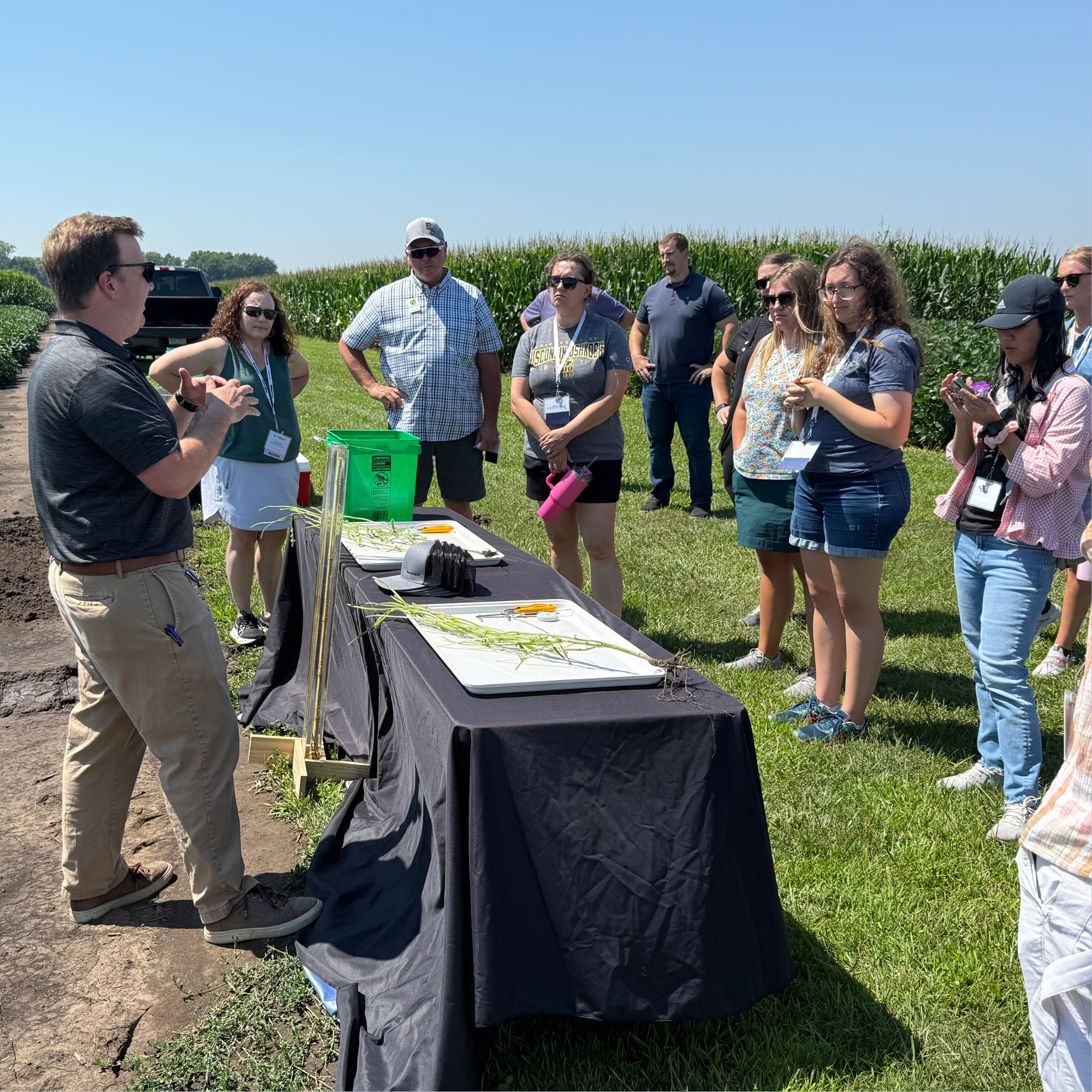
The first stop on the tour was at Syngenta Seed Institute. Syngenta is a global agribusiness company shaping tomorrow’s agriculture as a leader in crop protection, as well as seed research and development. Attendees took a guided tour of Syngenta’s research campus and learned about the process of developing a seed treatment, how the treatment will protect plants, and how it will impact soil, water, and the food we eventually eat. Seed treatments are created with a variety of ingredients/materials, and one tour attendee shared that they were really fascinated by the use of seaweed!
The tour group saw test plants through all stages of development – from seeds, to small sprouts, to plots of corn and soybeans being tested out in the field – giving them a first-hand look at how research becomes real-world solutions.
Cannon Valley Ranch
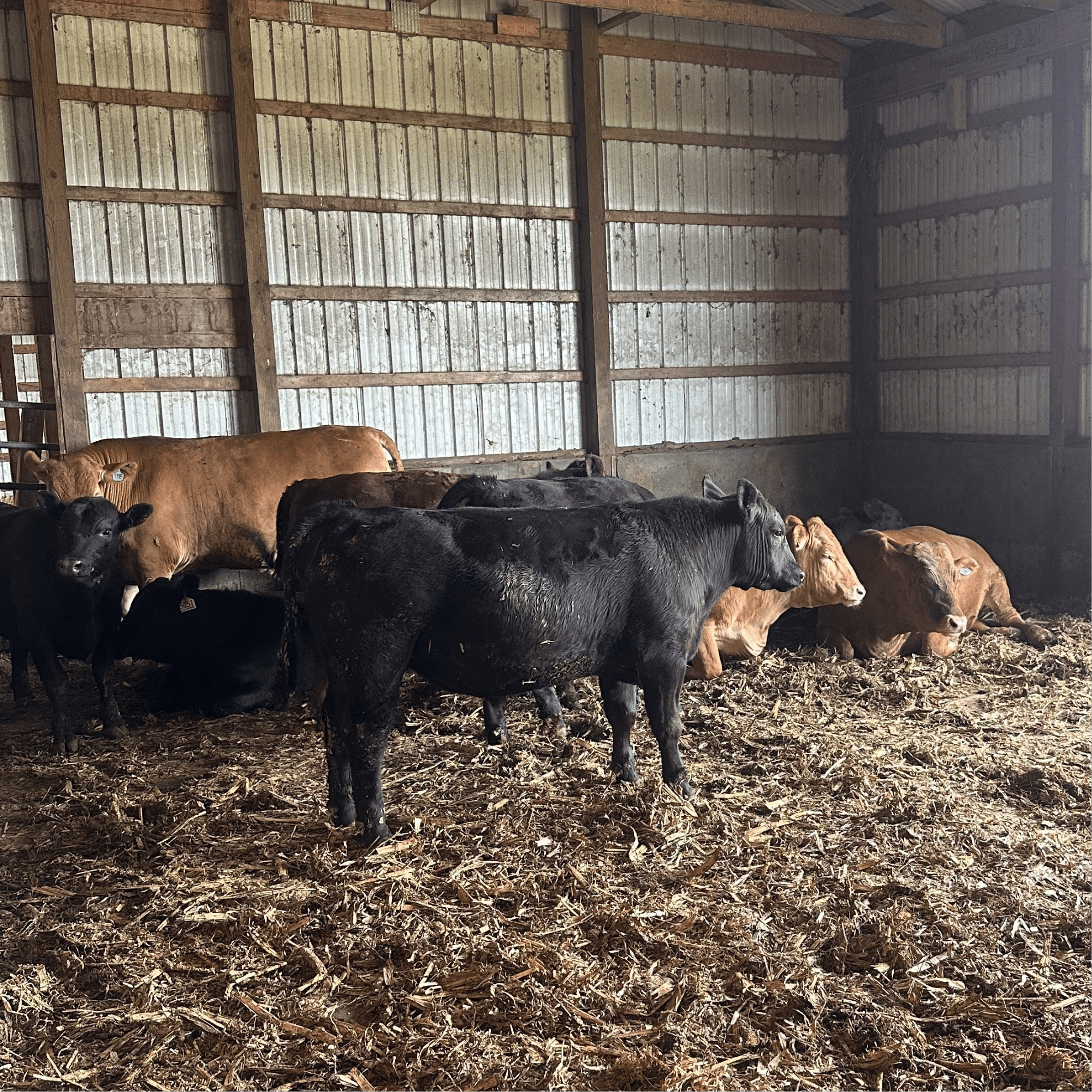
The second stop on the tour was Cannon Valley Ranch owned by the Waugh family where they raise Black Angus and Akaushi (Wagyu) beef cattle. The ranch is known across the country for their top-tier cattle that are highly sought after for breeding and reproduction. Their annual herd builder sale is highly anticipated by many. The Waugh family is committed to raising cattle sustainably and practices regenerative agriculture.
In addition to raising cattle for breeding, they also sell beef directly to consumers! In 2018, they began their Ranch-to-Table initiative and consumers can now purchase their high-quality beef directly from their website.
Tour 2: America’s Dairy and Berry Land
University of Wisconsin - River Falls Wuethrich Family/Grassland Dairy Center of Excellence
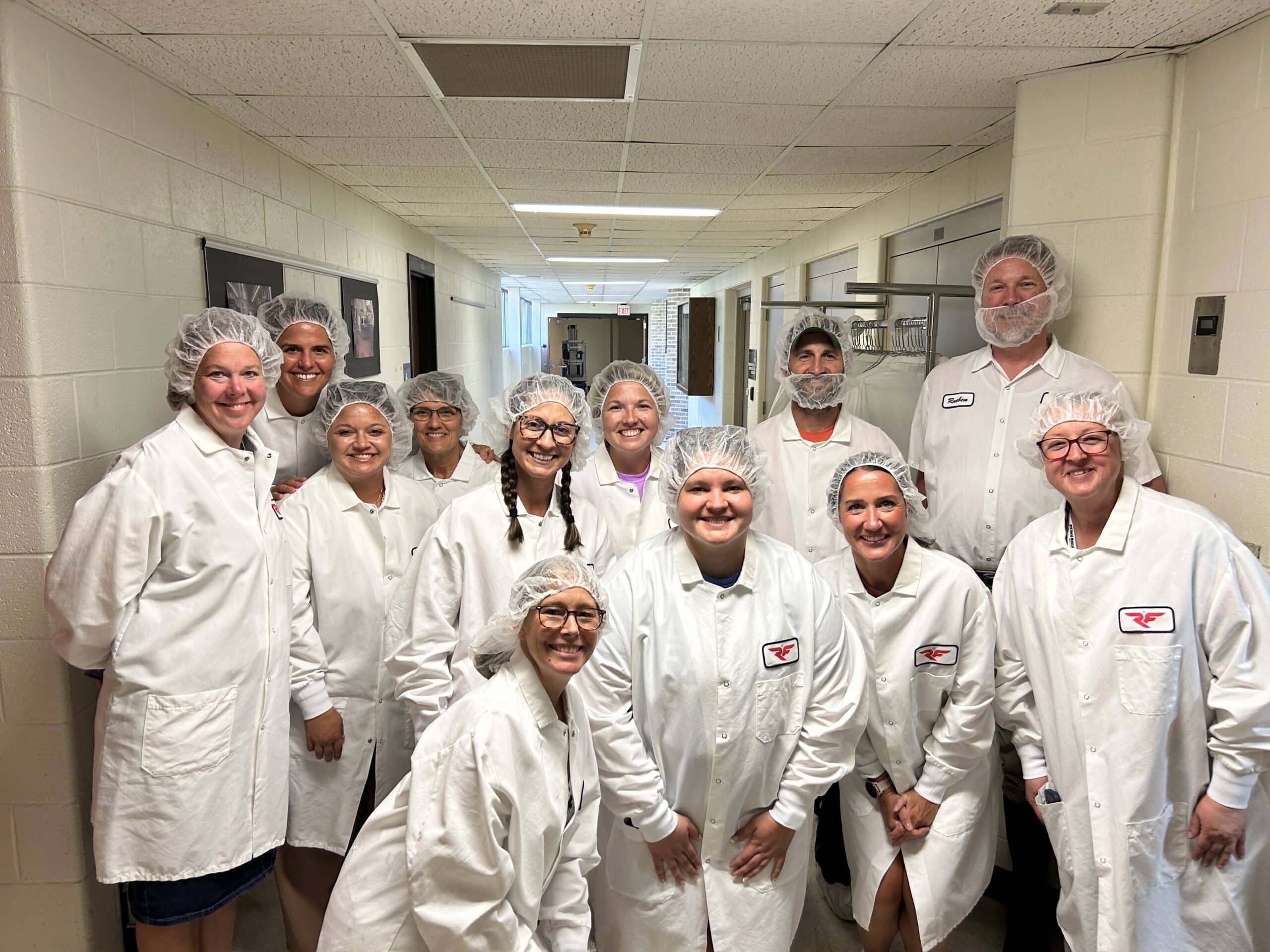
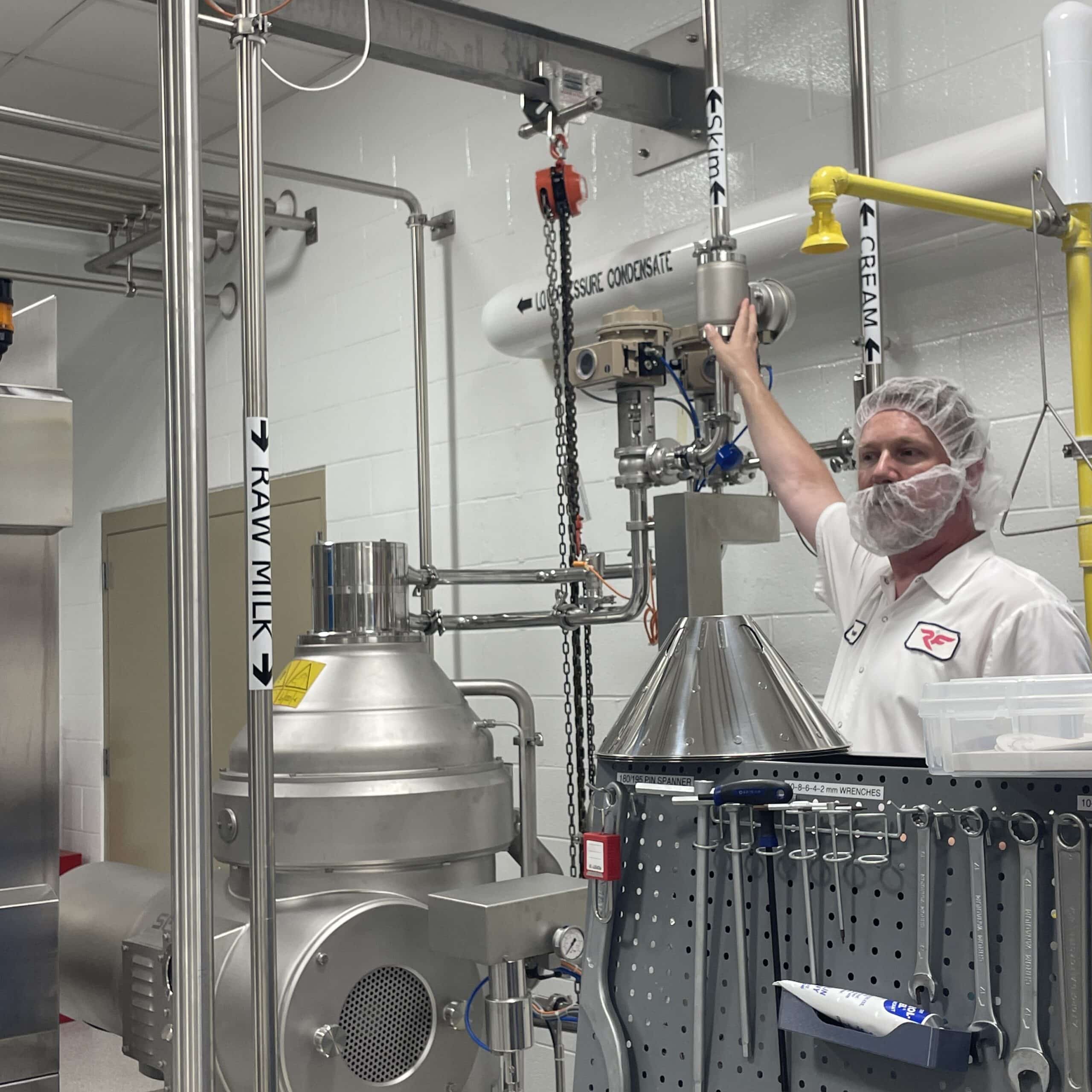
The America’s Dairy and Berry Land tour first took attendees to the newly renovated UW-River Falls Wuethrich Family/Grassland Dairy Center of Excellence dairy processing plant on a behind-the-scenes tour of how dairy products are made into cheese and ice cream.
At the dairy center, UW-River Falls students are involved in all stages of the ice cream making process. On the tour, the group learned about this process, from the pasteurization of the milk, to choosing flavors and adding ingredients, to the freezing process that gives the final product a smooth texture free of ice crystals. They also saw the cheesemaking process and witnessed the variety of techniques used to create different types of cheese.
White Pine Berry Farm
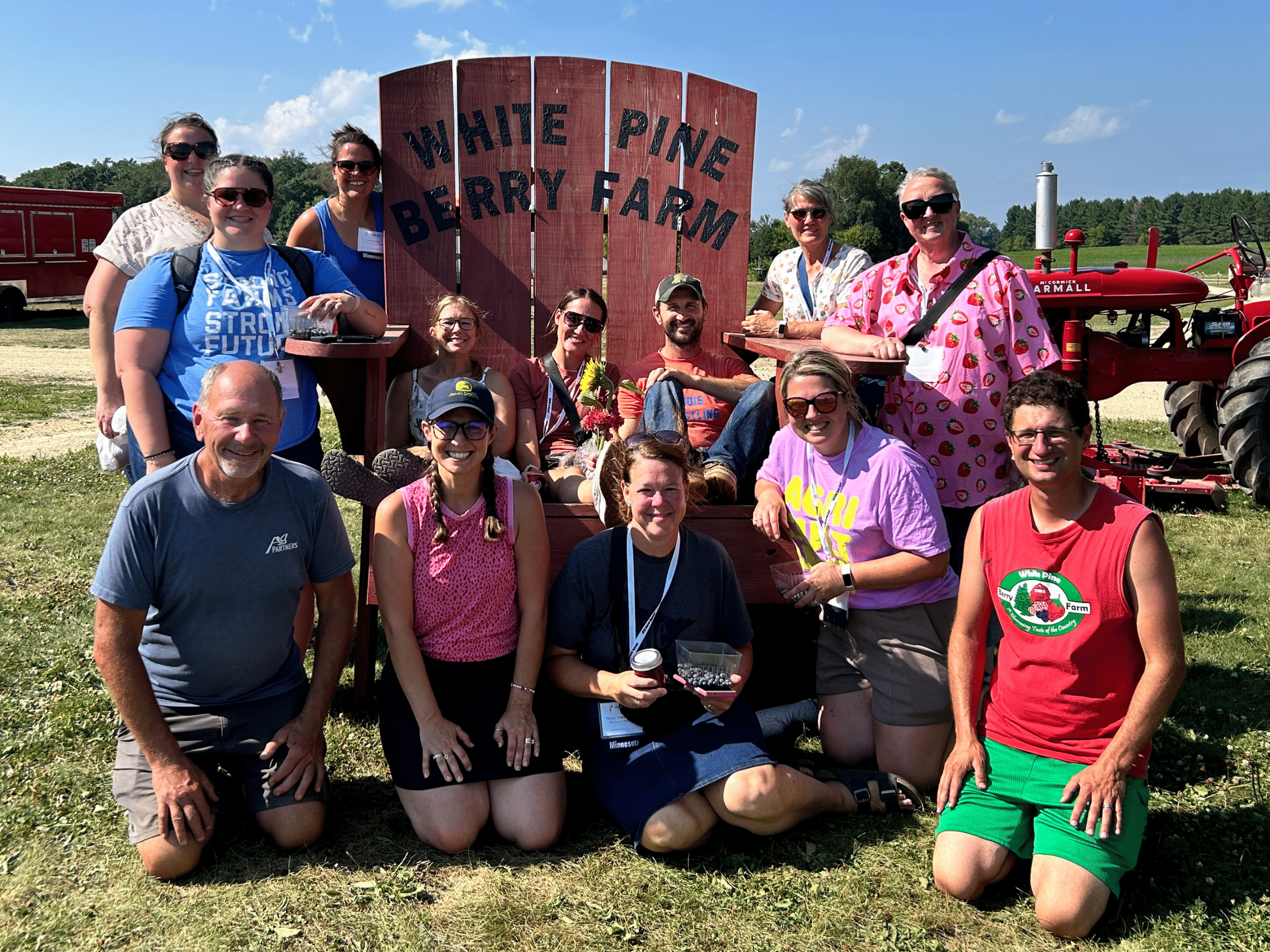
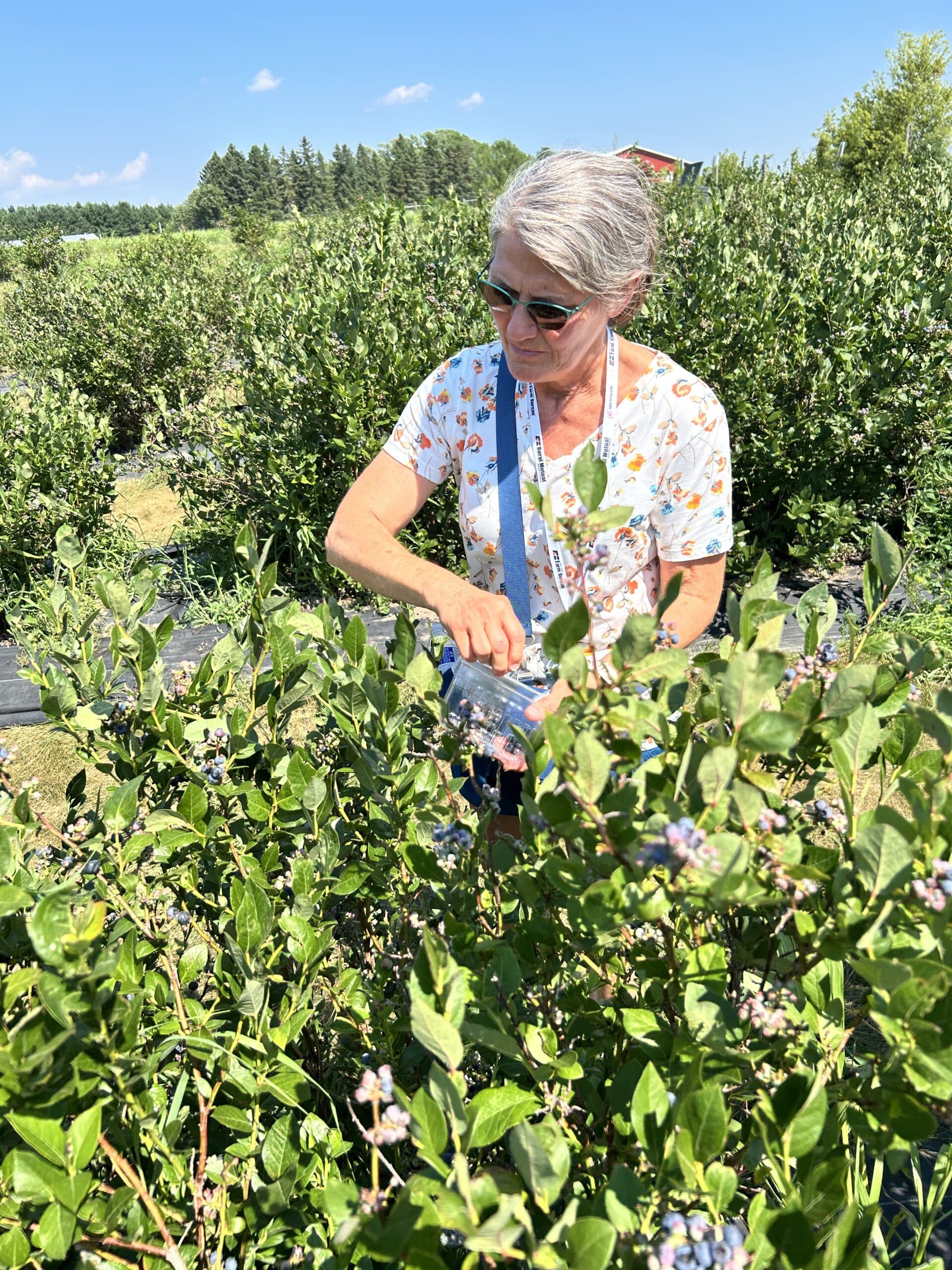
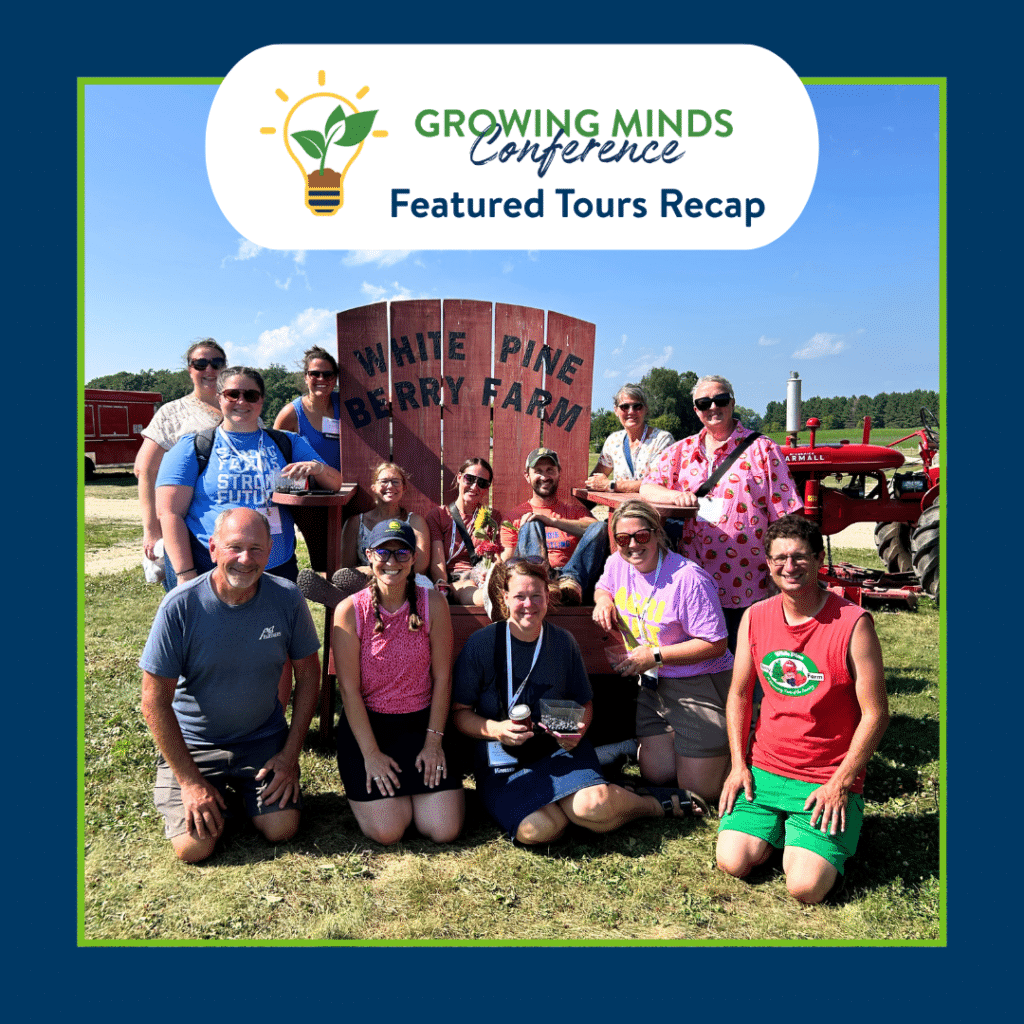
The second stop of the tour was at White Pine Berry Farm. The farm grows strawberries, blueberries, and raspberries, among many other types of fruits and vegetables. Owners Greg and Irma Zwald were dairy farmers for 40 years prior to establishing White Pine Berry Farm in 2012, and their son Andrew joined the operation in 2019. They concentrate on being a U-pick farm, inviting consumers to join in the agricultural process by harvesting the berries! The tour group got to try it out for themselves in the blueberry fields.
White Pine Berry Farm grows many varieties of their produce and are always trying to grow them in both conventional and unconventional ways. One tour participant said that their favorite part of the tour was getting out into fields of blueberries and having the opportunity to observe the visual and taste differences across varieties of the berry.
The farm has continued to diversify their offerings to customers over the years beyond just berries. They have U-pick sunflower and zinnia flower fields, a general store filled with local goods like doughnuts, jams, and fudge, a wedding venue, opportunities for professional photography sessions, and much more! They have also planted Christmas trees to be harvested in the future!
Tour 3: Integrated Indigenous Experience
Shakopee Mdewakanton Sioux Community Bison Herd
The Shakopee Mdewakanton Sioux Community (SMSC) is a federally recognized sovereign Dakota tribal government in Scott County, Minnesota. SMSC is guided by their core values of protecting the sovereignty and well-being of their community, as well as being a good neighbor, a good employer, and a good steward of the earth.
Bison are the largest mammal in North America and once freely roamed across much of the continent, but as colonization spread westward, bison were slaughtered in droves until only a few hundred remained. The Dakota people have always held a reciprocal relationship with their natural surroundings, including the bison which were used for food, medicine, and materials. In 2023, SMSC was gifted a small bison herd by the Sisseton Wahpeton Oyate in South Dakota. Today, the herd lives on 165 acres of restored prairie in Shakopee, MN.
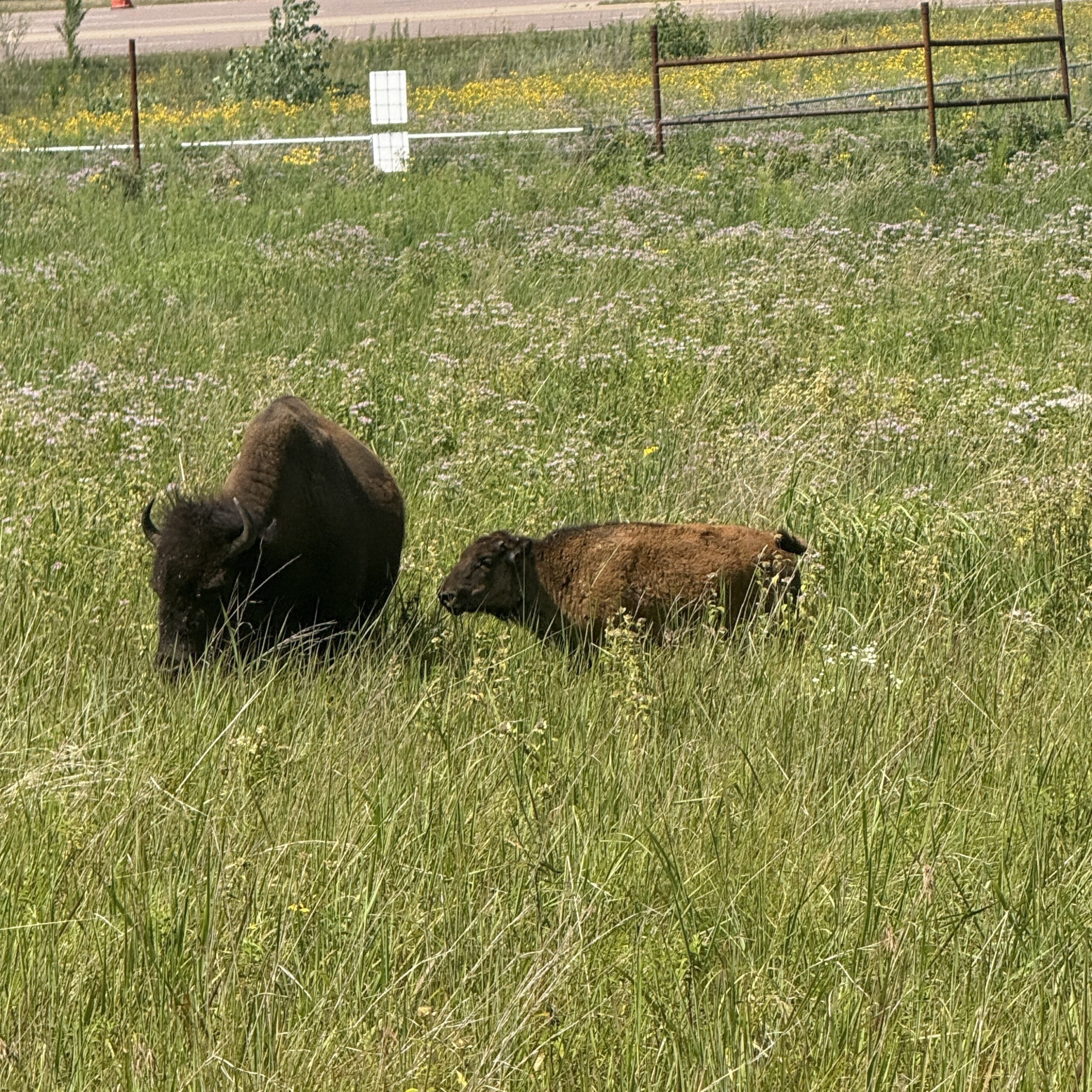
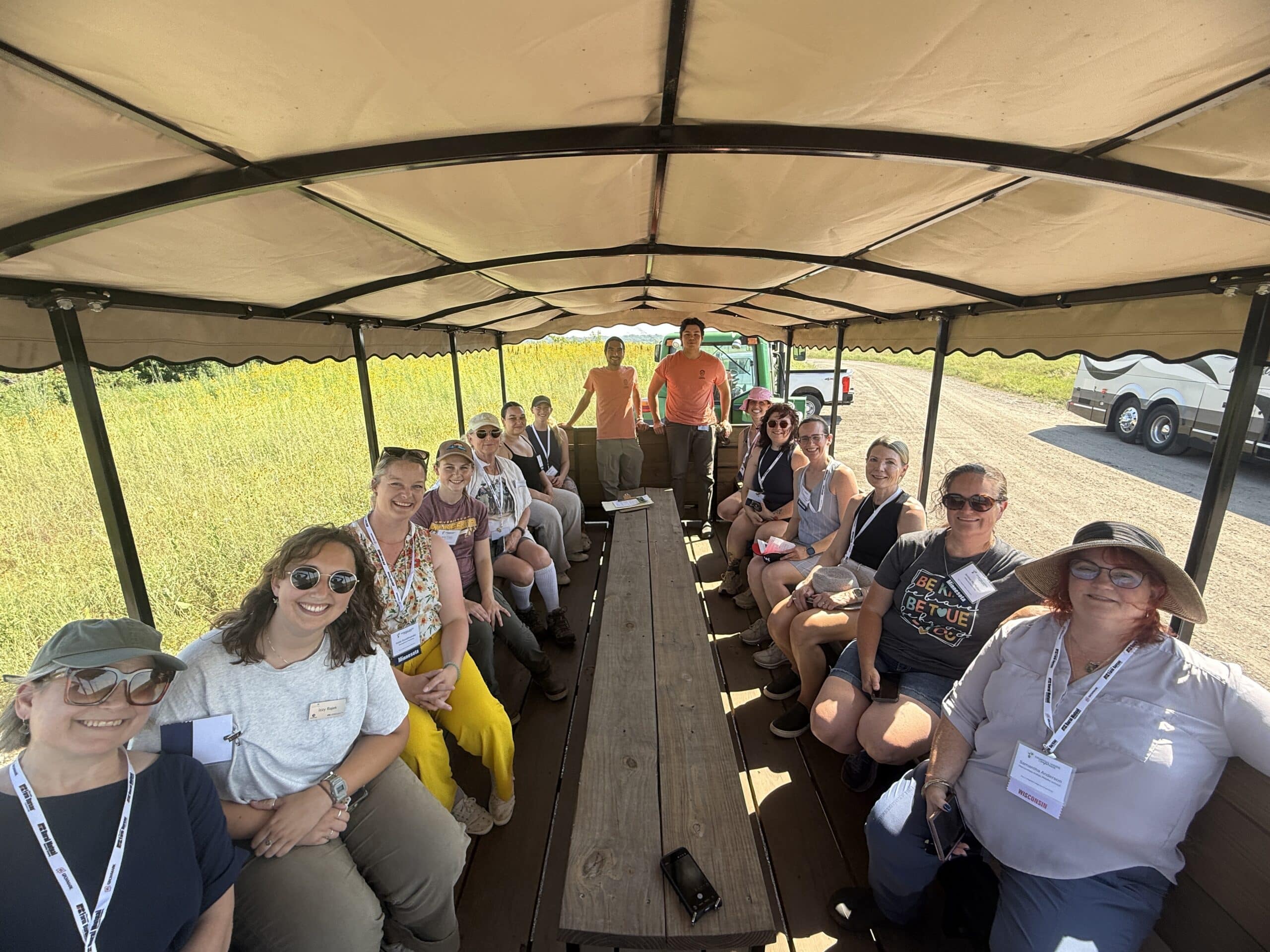
The bison’s return to SMSC has been culturally important as it has provided an opportunity to bring back traditional ceremonies, food, and medicine for the community. Tour guide Sam Crowfoot shared that in the past year and a half, four bison have been harvested and shared with the community, providing food and other materials.
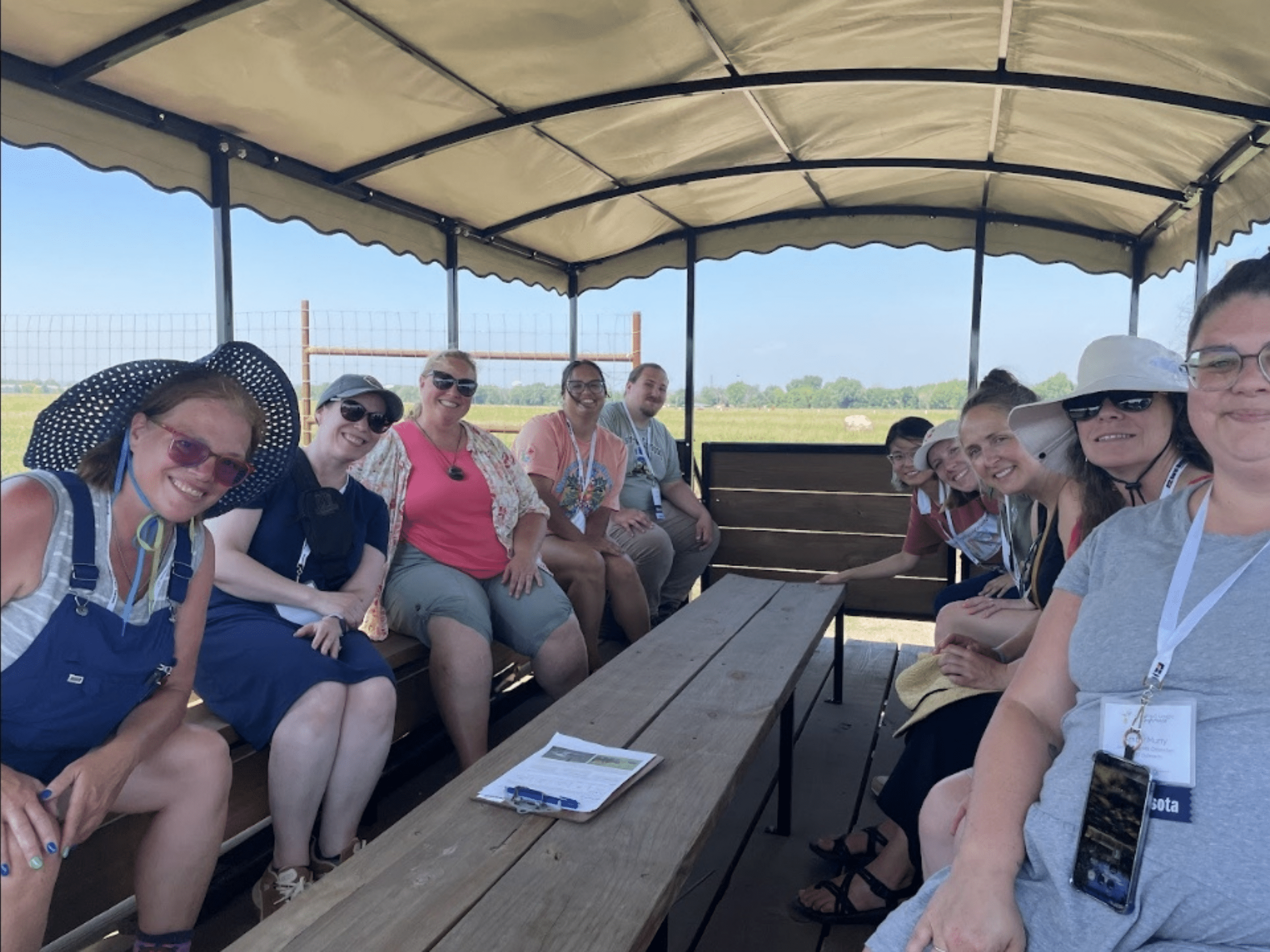
The tour group got the opportunity to ride in a tractor-pulled trailer into the prairie to get a closer look at the bison herd. While it was a very hot day, the tour guides shared that bison – unlike cattle – have adapted to hotter conditions. They are very thermodynamic: their horns are designed to release body heat, their thickly-insulated fur sheds in the summer, and they tear up grass to get closer to the soil which remains nice and cool even during the heat of the day. While the tour group stayed a respectful distance away from the herd, they were able to spot some calves, which are a lighter red color compared to the darker brown adults.
Wozupi Tribal Gardens
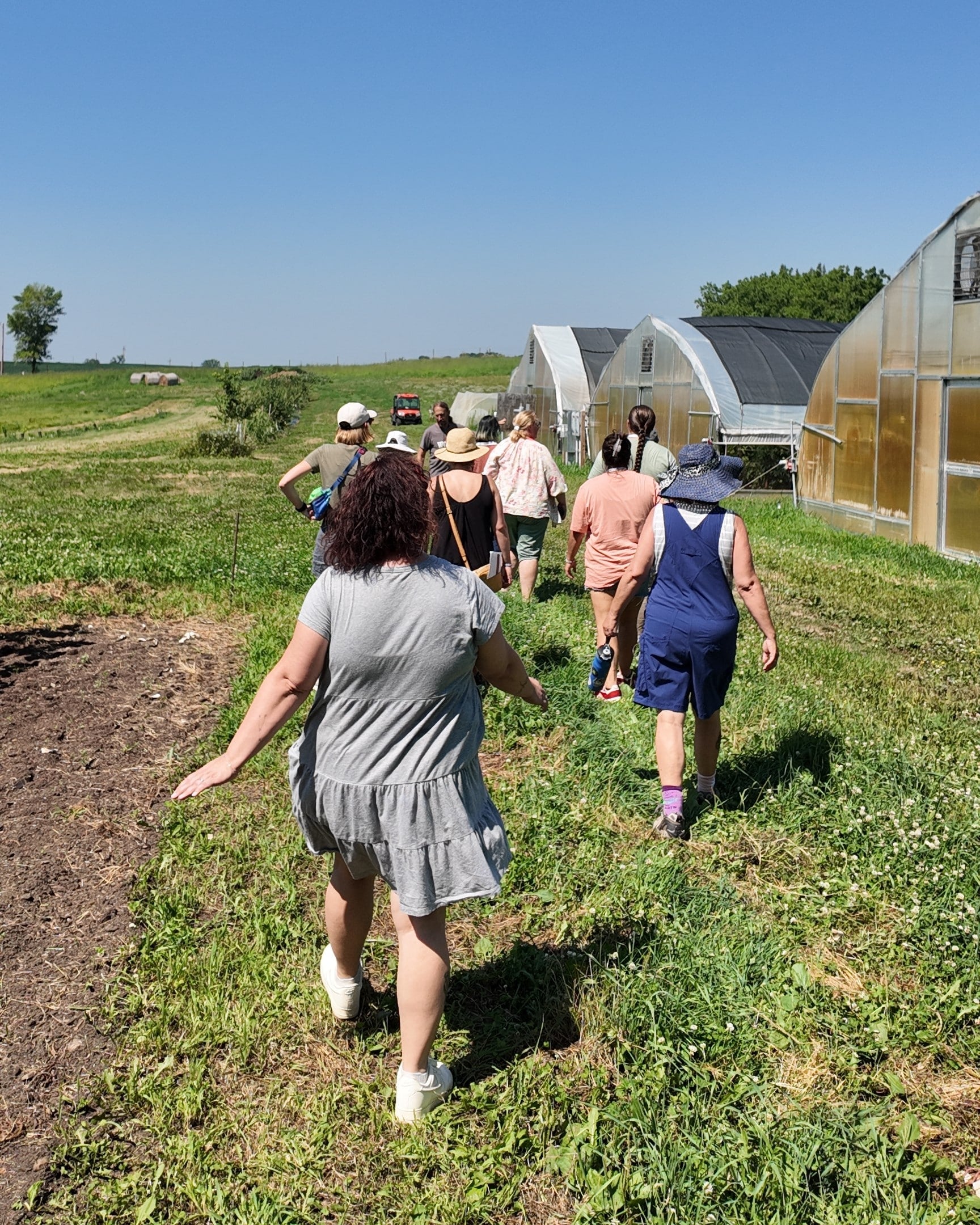
The Wozupi Tribal Garden is an organic farm owned and operated by SMSC that’s committed to sustainably growing food and nourishing the earth, the community, and people’s minds and bodies. The farm produces a variety of fruits and vegetables across many fields and orchards, as well as inside high tunnels that shelter plants from colder temperatures which extends the growing season. They also grow stands of wild, edible shrubs and fruiting bushes and invite community members to harvest them for free.
One popular product that’s made on the farm is maple syrup! Produced in a newly-built sugarhouse, the farm averages 150 to 300 gallons of syrup every year. This year, they broke their record with over 400 gallons!
The tour group had the opportunity to see the fields of produce and learn about the importance of cover crop use to protect the soil. They also walked through one of the high tunnels filled with tomato plants that nearly reached the ceiling. The large variety of crops produced on the farm are shared with the community through donations and CSA boxes as a way of connecting people with fresh, healthy foods.
Tour 4: Behind the Scenes with Gertens
The innovative production team at Gertens rely heavily on STEM (science, technology, engineering, and mathematics) to raise all their plants for the garden center. After being around for over 100 years, they’ve adapted to major changes in markets, customer demands, technology, and more.
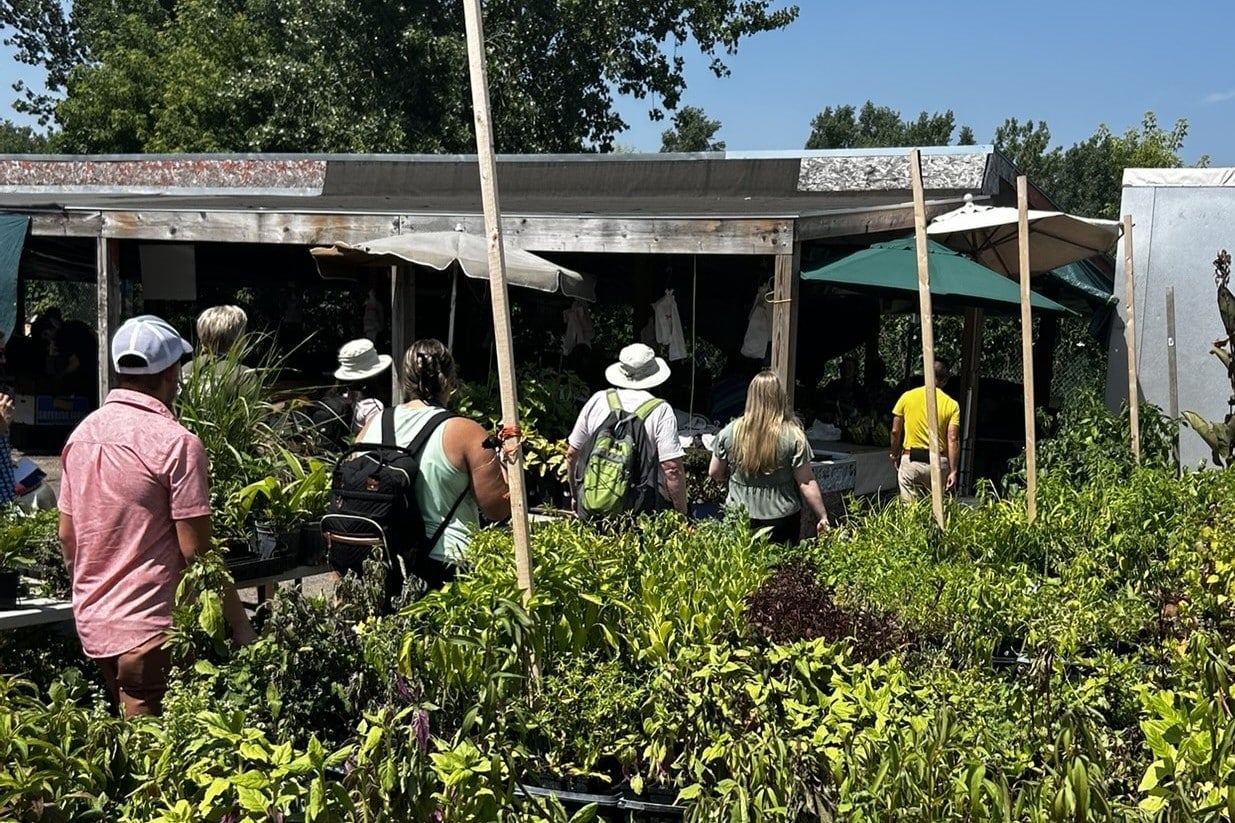
The tour group got to go behind-the-scenes with the Gertens team into massive fields and warehouses filled with a huge variety of plants – annuals, perennials, natives, houseplants (including succulents and cacti), shrubs, and more! Technology is a huge part of raising all these plants. The fields have extensive irrigation systems, including drip irrigation and sprinklers, to ensure nothing dries out, and in the warehouse, tour attendees got a look at a soil machine. These huge pieces of equipment are lined with conveyor belts to create a suitable soil mixture which is then packed into planters to the appropriate density for seeds.
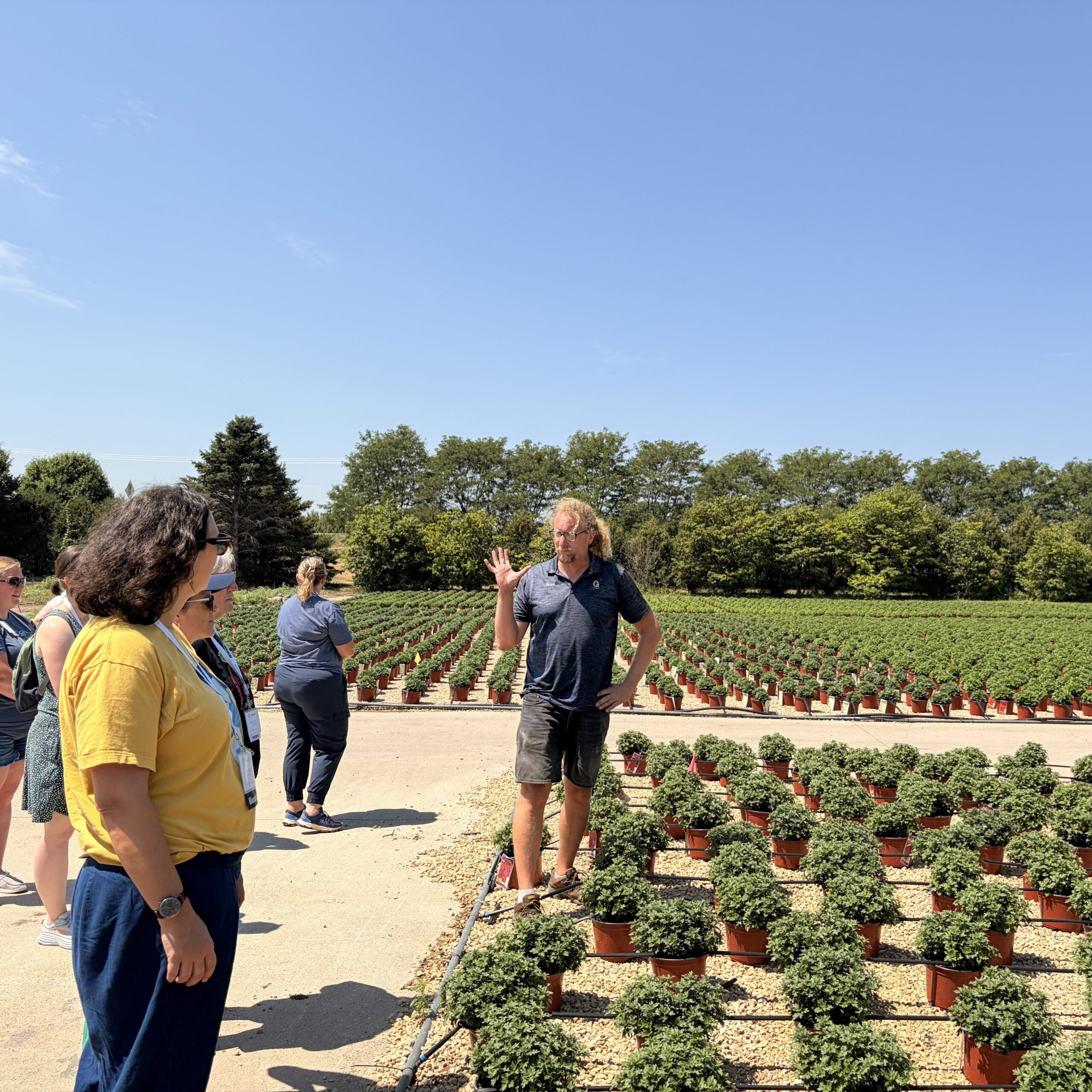
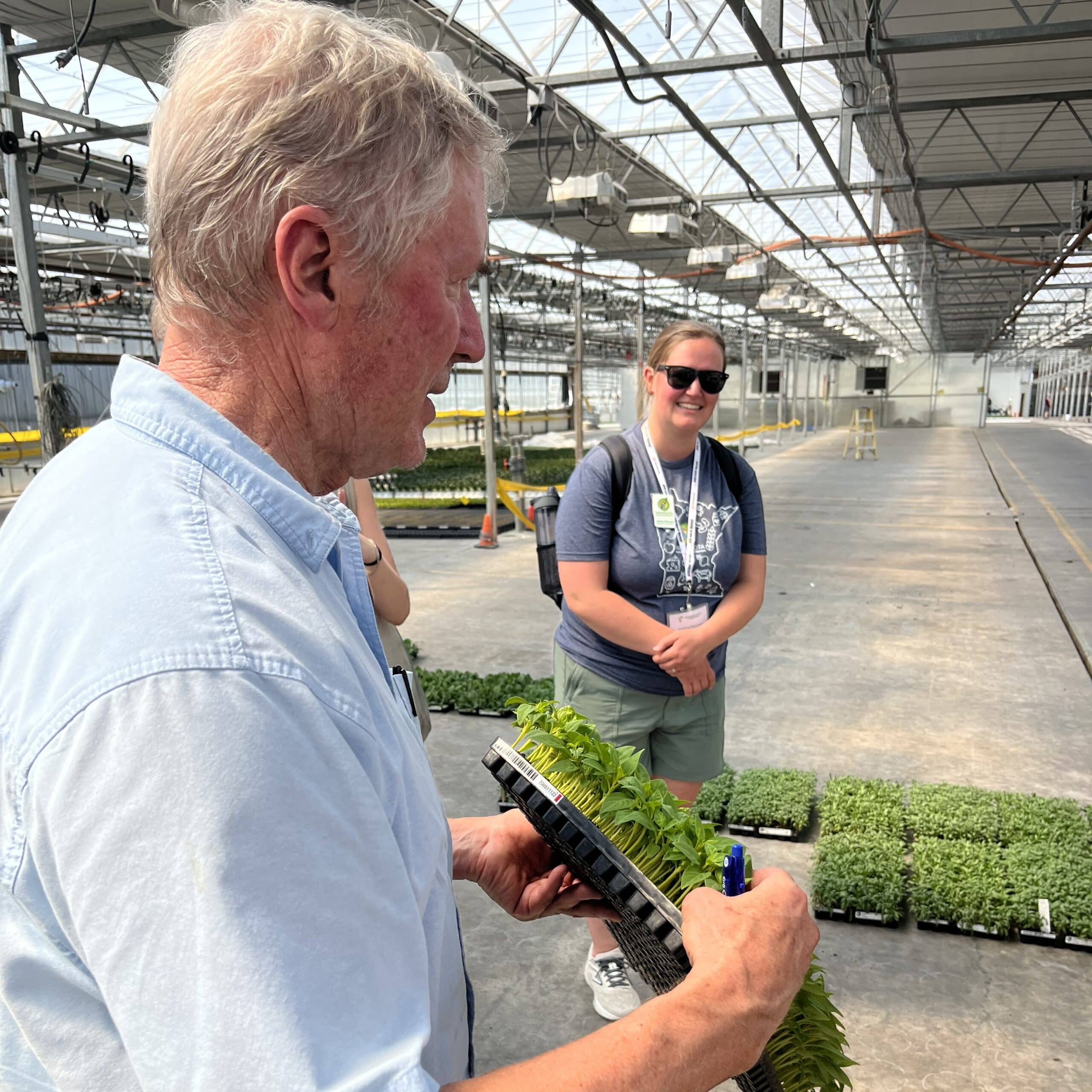
Seeing agriculture in practice is important to understanding its impact, but storytelling plays a role too. Gertens is a family-owned and operated business, and generations of family have grown up with it. The tour guide – a direct descendant of Frank Gerten (the company’s founder) – shared many stories of exploring the greenhouses at night, playing with his cousins and siblings in the warehouses, and just how deeply the garden business has been ingrained in his life.
Hearing someone’s lived experience through storytelling can make learning about agriculture seem more relatable. This tour showed off a type of agriculture that is more commonly thought of as gardening rather than farming. People who aren’t as familiar with crop and livestock farming may have an easier time learning about agriculture in the context of gardening because of its familiarity.
Tour 5: Food, Culture, and Community at HmongTown Marketplace
St. Paul is home to the largest Hmong population in the United States, with deep roots on the East Side. The iconic HmongTown Marketplace is made up of multiple buildings and an open-air market, filled with more than 125 small businesses and food vendors. The market is not only a place to shop – it’s a powerful center of Hmong culture, history, connection, and entrepreneurship.
The tour group met Toua Xiong, founder of HmongTown Marketplace. Born in Laos in 1967, his family faced years of hardship due to war, eventually arriving at the Vinai Refugee Camp in Thailand in 1979. In 1986, his family moved to St. Paul, Minnesota where he was determined to build a better life. Toua earned a bachelors and masters degree in 3 years between ages 18-21, and after years of entrepreneurship, founded HmongTown Marketplace in 2004. He is a testament to himself, his family, and his community. The tour group explored the marketplace with Toua and shared that his drive and ability were truly inspiring.
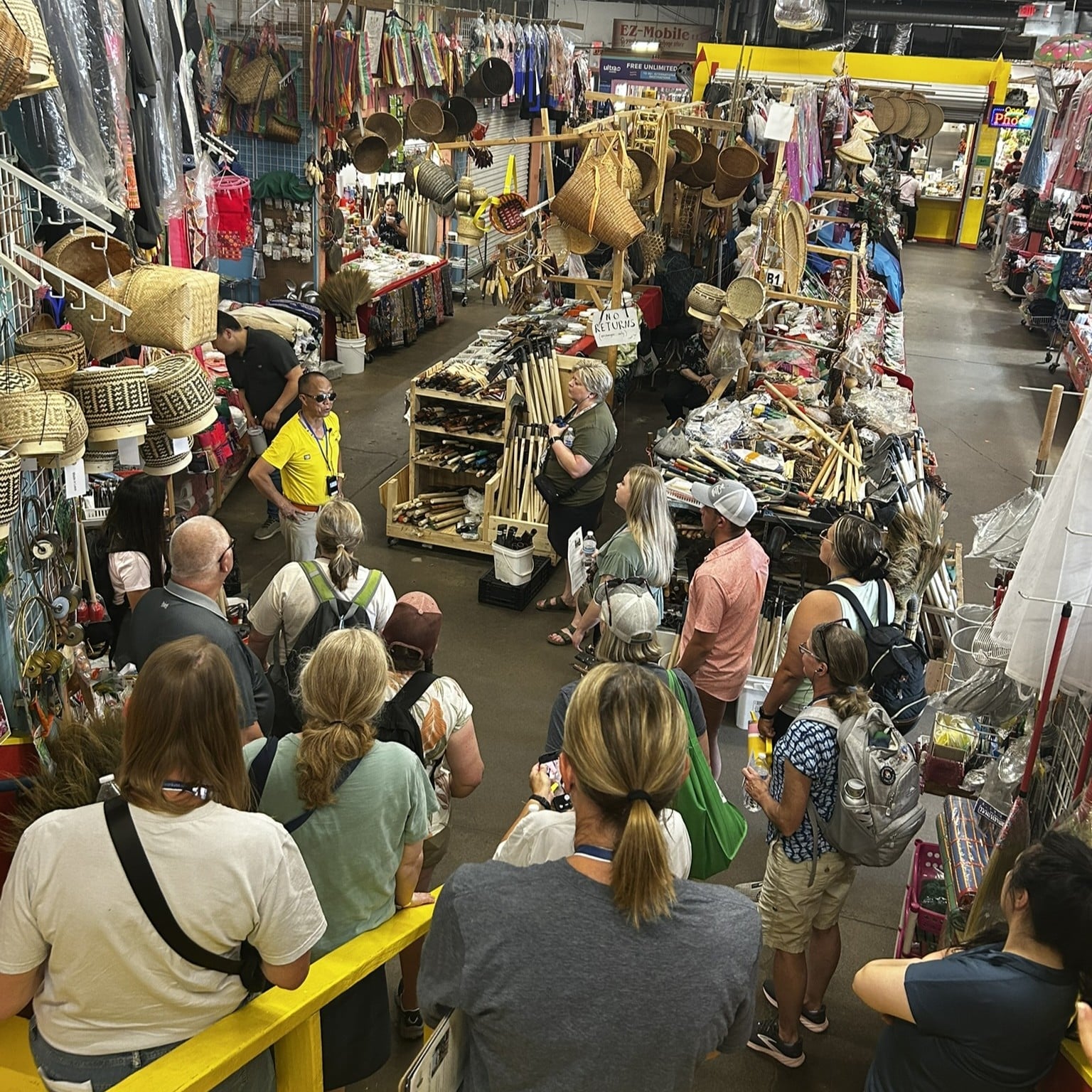
The tour group’s other guide, Chong, brought an intersectional perspective as a Hmong woman and an educator. Chong taught the group about the connections between Hmong culture, spirituality, and agriculture, and how deeply rooted those connections are. One tour participant shared that “She was such an engaging speaker and her lesson plan opened my perspective on agriculture, culture, and family even in my own experiences.”
The HmongTown Marketplace is a vibrant representation of Hmong culture and is an amazing place for everyone in the community to purchase locally grown agricultural produce and sample delicious foods.
Classroom Connections
These featured tours showed off many topics that can be brought back into the classroom to get students involved with agriculture! We’ve put together a collection of FREE educational resources from our curriculum matrix that relate to each tour, as well as links to other resources!
Seeds, Science and Beef
Seeds, Miraculous Seeds: Students dissect seeds, identify the anatomy and function of seed parts, and classify seeds as monocots or dicots.
Supreme Seeds: Students observe various types of seed, discover the many uses of seeds, taste edible seeds, and make a seed mosaic.
Beef Basics: Students explain the value of the beef cattle industry, including the products cattle produce, the production process from farm to plate, and how cattle can utilize and obtain energy from grass and other forage.
Beef: Making the Grade: Students will evaluate the USDA grading system for whole cuts of beef and discuss consumer preferences and nutritional differences between grain-finished and grass-finished beef. Students will also distinguish various labels on beef products and discuss reasons for the government’s involvement in agricultural production, processing and distribution of food.
Farm Camp Minnesota: One tour participant shared that their class had the opportunity to connect with Cannon Valley Ranch through Farm Camp Minnesota! Visit their website to learn how you can provide your students with a unique learning experience at a farm.
America’s Dairy and Berry Land
Cheesemaking: From Liquid to Solid: Students make fresh mozzarella cheese and discover the science (changing a liquid to a solid), art, and craft involved in the development of specialty cheese.
FoodMASTER: Milk and Cheese: Students taste test four different milks while comparing color, texture, taste, and cost. In addition, students examine four milk food labels and complete a table comparing calories, fat, and calcium found in the milks. Students make cottage cheese by heating milk to the proper temperature and adding an acid (vinegar) to speed up the separation of curds and whey.
Milk, Sugar, Science: Engineering Ice Cream - (Grades K-2) and (Grades 3-5): Students explore the journey of milk from cow to ice cream, make ice cream in a bag, and discover how food engineers have developed many different processes for making ice cream.
Bunches of Berries: Students investigate a variety of berries, discover how and where they are grown, and explore their nutritional benefits.
FoodMASTER: Fruits: Students identify fruits that grow on a tree, bush, or vine, classify fruits as pome, drupe, berry, melon, or citrus, perform an experiment about the browning of fruit, and dry plums to make prunes.
Integrated Indigenous Experience
From Sap to Syrup: Students recognize how geography and climate allow for the growth of maple trees and the process of making syrup, identify the characteristics of maple trees that produce the best sap for making maple syrup, and name the steps in the process of creating syrup from sap.
Three Sisters Garden: Students investigate the "three sisters" crops (corn, beans, and squash) and explore the benefits of planting these crops together.
Food Miles: Students explore the economic and environmental benefits of buying locally grown food.
Bison Blog Post: To find learning resources about bison, check out our blog article “July is National Bison Month!”
Behind the Scenes with Gertens
How Does Your Garden Grow? - (Grades K-2) and (Grades 3-5): Students synthesize what they know about soils, plants, and the environment to plan a garden, present their plans, and explain why they made the decisions that they did.
Farming in a Glove - (Grades K-2) and (Grades 3-5): Students observe how a seed sprouts and investigate the conditions necessary for germination to occur.
Plants Around You: Students categorize plants into groups, describe what plants need for healthy growth, and start their own garden by planting seeds inside a cup.
Growing Plants in Science and Literature, More Than an Empty Pot - (Grades K-2) and (Grades 3-5): Students use the story of The Empty Pot to explore literature and science, practicing story mapping and examining the needs of plants and the importance of soil and water. Like the characters in the story, students plant and observe the growth of seeds.
Food, Culture, and Community at HmongTown Marketplace
From the Field to the Farmers Market (Video):Travel with nine-year-old Mason as he shows what it's like to be a part of a farm family and bring produce to the Farmers Market! Mason and his family are part of the Hmong American Farmers Association (HAFA), and they have been selling at the farmers market for over 20 years. See how their produce is grown and sold at the farmers market.
Cultures, Food, and Communities Around the World - (Grades K-2) and (Grades 3-5): Students explore different cultures around the world and their unique traditions centered around food and its preparations. Students discover how food gets from the farm to the grocery store.
Farmers Market Finds: Students explore the value of farmers markets to local communities and discover the benefits of locally-grown food.
Agricultural tours are an important part of lifelong learning for educators who are motivated to bring agriculture into their classrooms. These five featured tours provided conference attendees with an opportunity to learn about different types of agriculture and how it connects to their communities.
Thank you to the Minnesota Humanities Center for organizing tours at the Shakopee Mdewakanton Sioux Community and HmongTown Marketplace.
And thank you to Wisconsin Agriculture in the Classroom for putting on the first-ever Growing Minds Conference with us!
Follow us on Facebook and Instagram to keep up to date with upcoming events and find FREE educational resources!
Sign Up to Receive Our Newsletter!
The Minnesota Agriculture in the Classroom e-newsletter provides us with the opportunity to connect educators with ideas on incorporating food, fiber, forests, flowers, and farming in their curriculum. Our newsletter highlights these connections through lesson plans, websites, books, videos and additional materials for classroom teachers, agriculture advocates and community volunteers who teach science, social studies, language arts, and health/nutrition. Stay updated with all Minnesota Agriculture in the Classroom upcoming events and news by subscribing!
Click here to find our sign up page!
Check out our other blog posts!


August 13, 2026
Elliot Dusosky
Minnesota Agriculture in the Classroom