Central MN Teacher Tour
Smude Black Angus Beef Farm and Sunflower Farm, and Sprout MN Food Hub
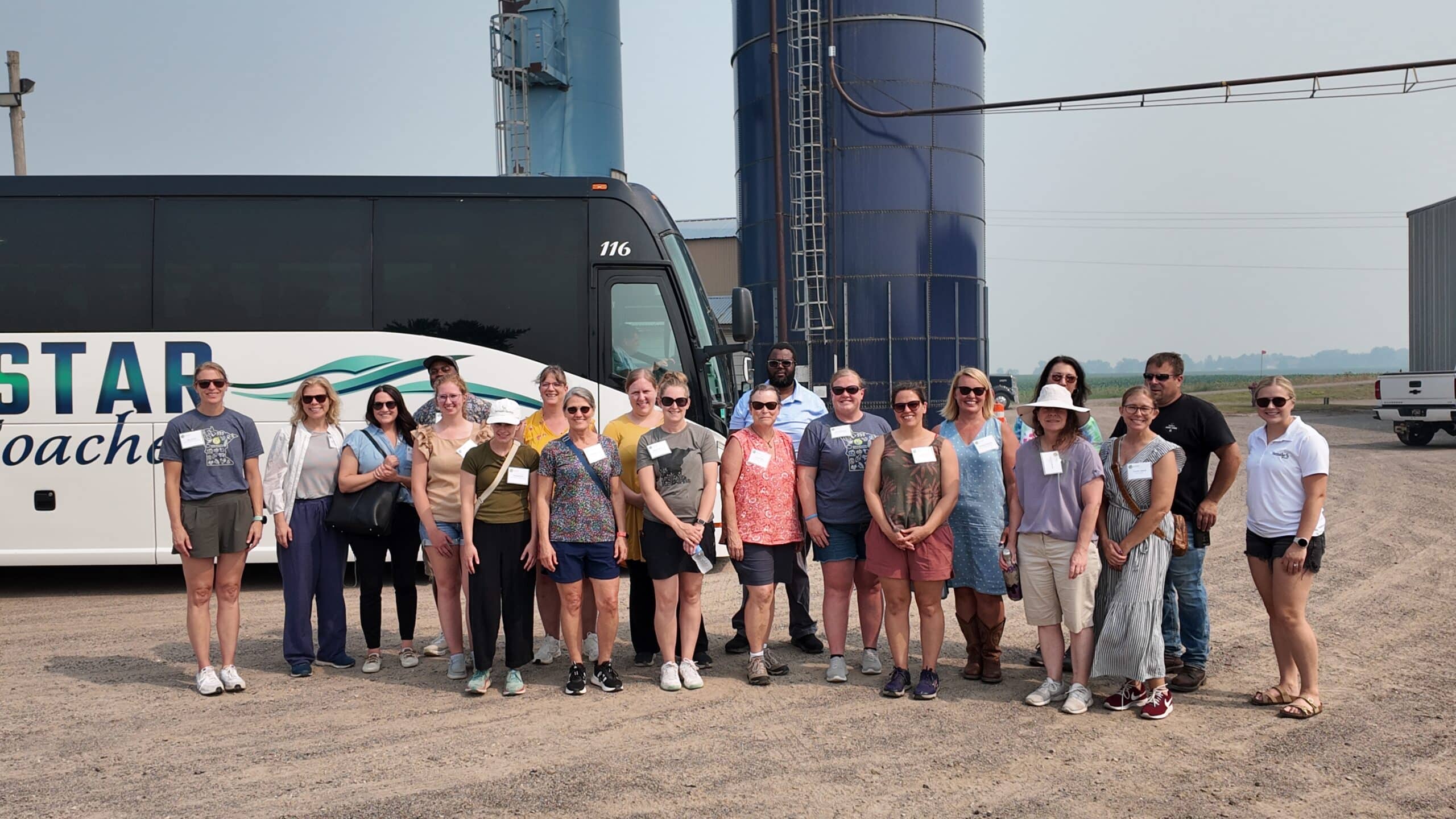
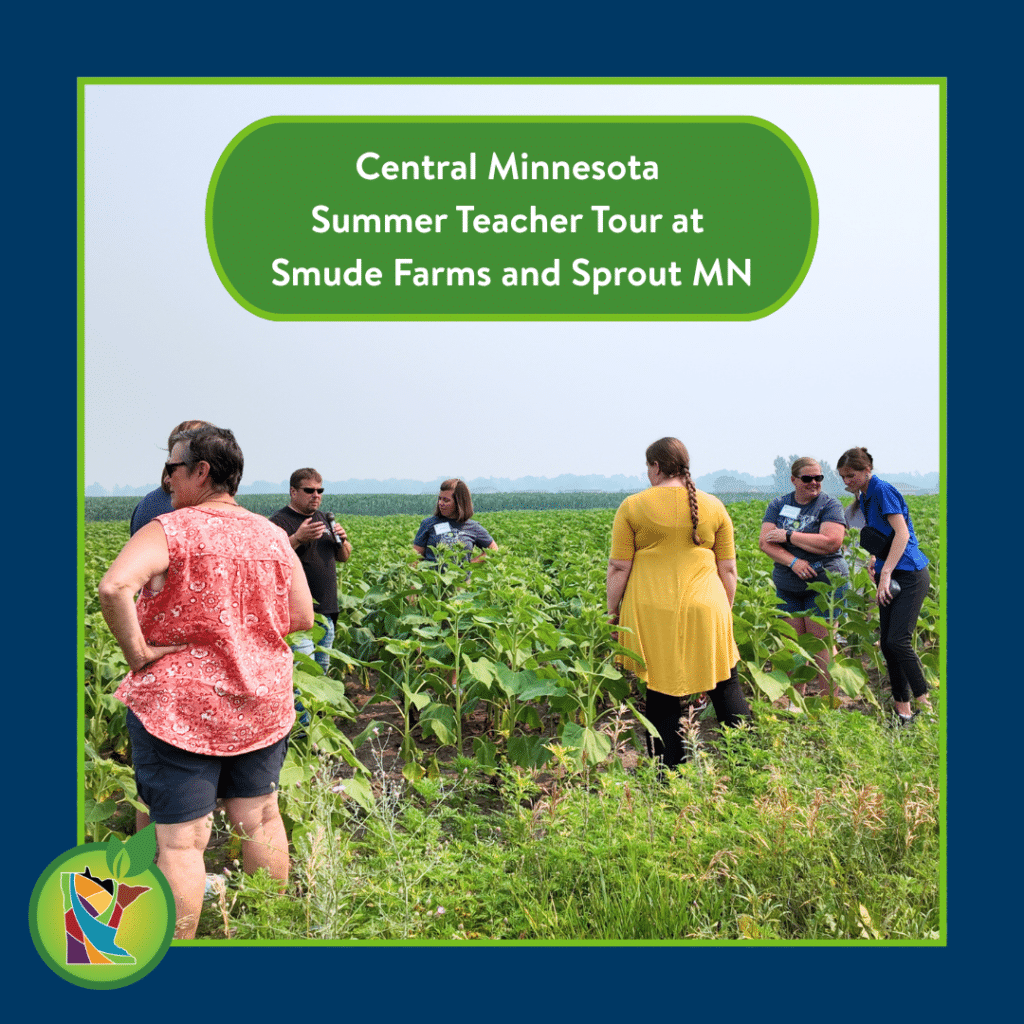
On Wednesday, July 15th, 2026, educators from across Minnesota joined us for a Summer Teacher Tour! These tours provide educators with first-hand exposure to agricultural production, food systems, and community partnerships. We also equip educators with standards-based resources that can be brought into their classrooms to increase agricultural literacy in students!
Our tour this summer featured two organizations that aim to connect their community to locally-produced food: the Smude family’s Black Angus beef and sunflower farms, and the Sprout MN Food Hub.
Smude Farms
We started off our tour with the Smude family on their Black Angus beef farm! Tom and Jenni Smude purchased their farm in 1998 and have been raising beef cattle from the start. They grow all of their own feed, creating a mix of corn, alfalfa, grass, and sunflower meal. The sunflower meal is a byproduct of their sunflower oil production and serves as a source of protein and healthy fats for the cattle. All of their beef products are processed by a local butcher – RJ’s Meats in Hillman, MN – and they’ve been selling directly to customers since 2005.
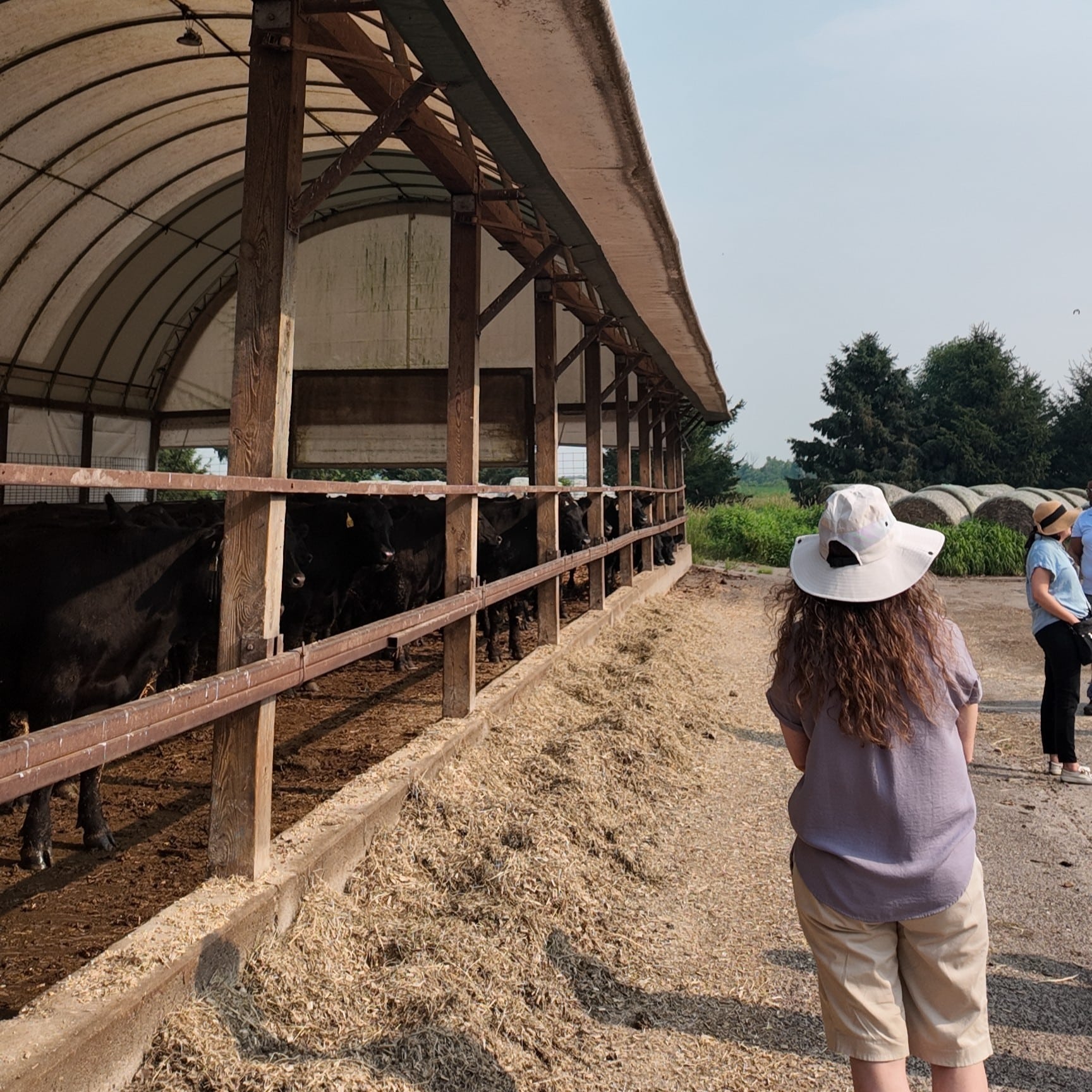
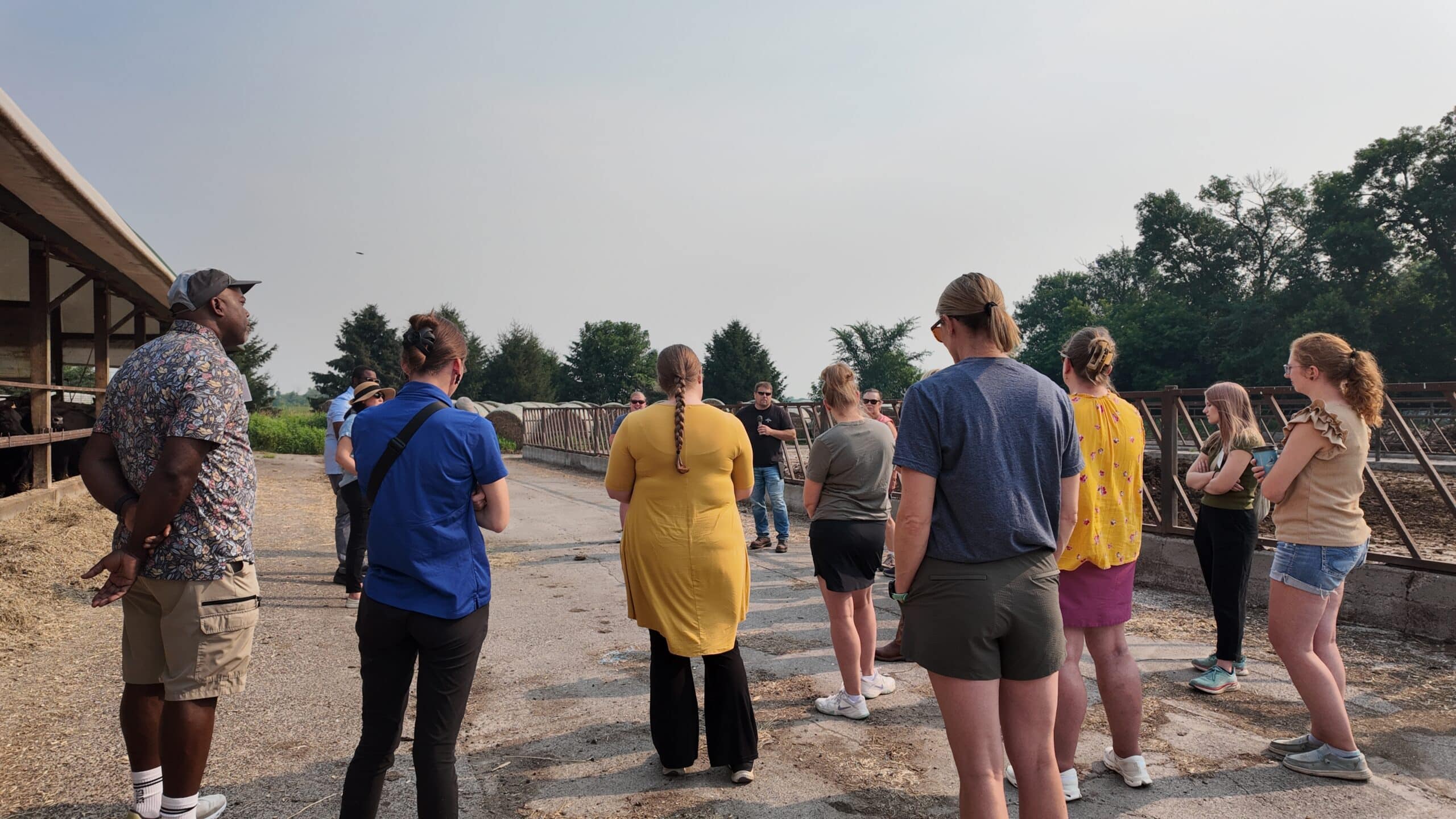
At the farm, we got up close with some cattle in the feed lot, who were very curious about our tour group. We also got to see inside the calving barn where there were two calves less than one day old! Smude farms breeds all their own cattle and currently have 14 bulls for all their cows and heifers.
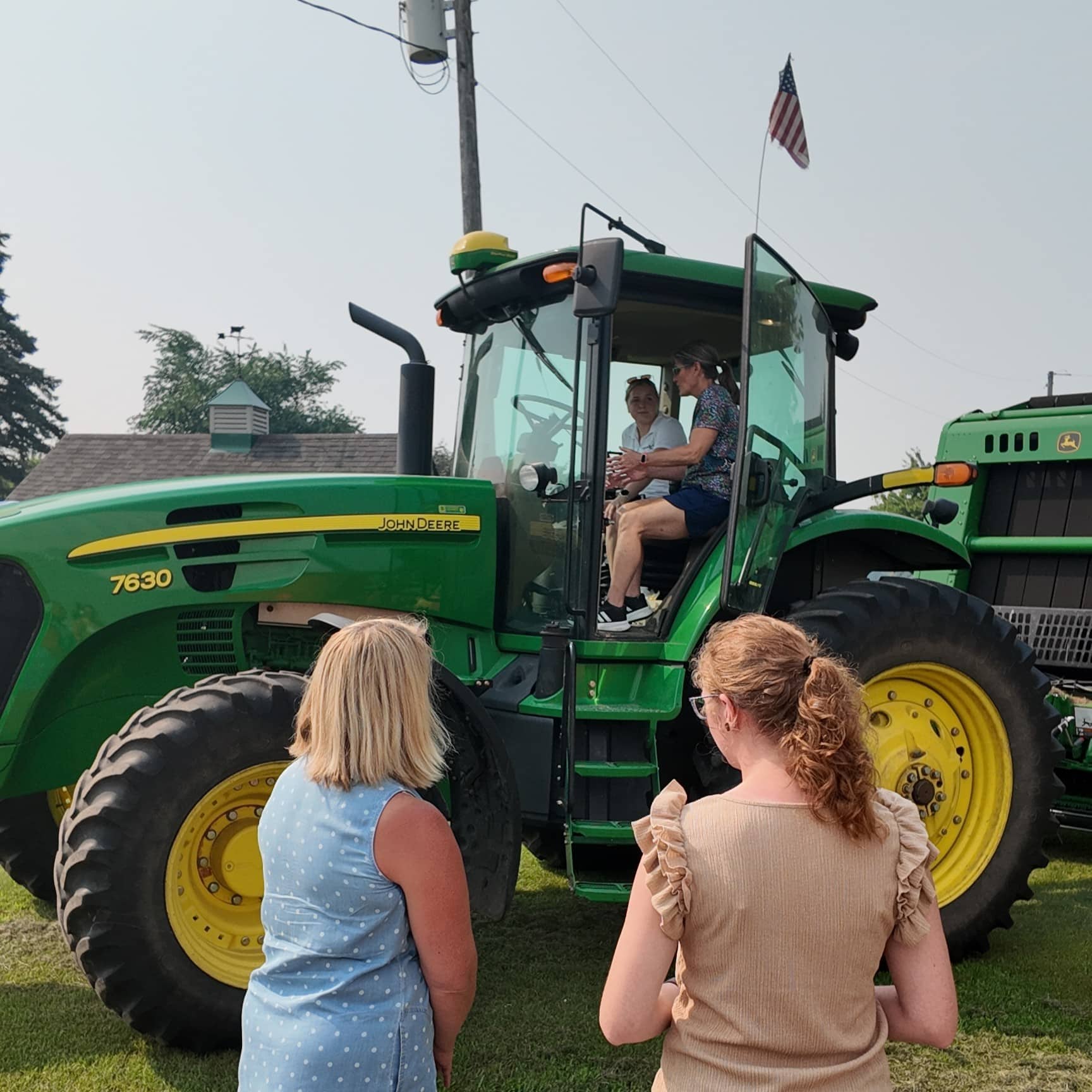
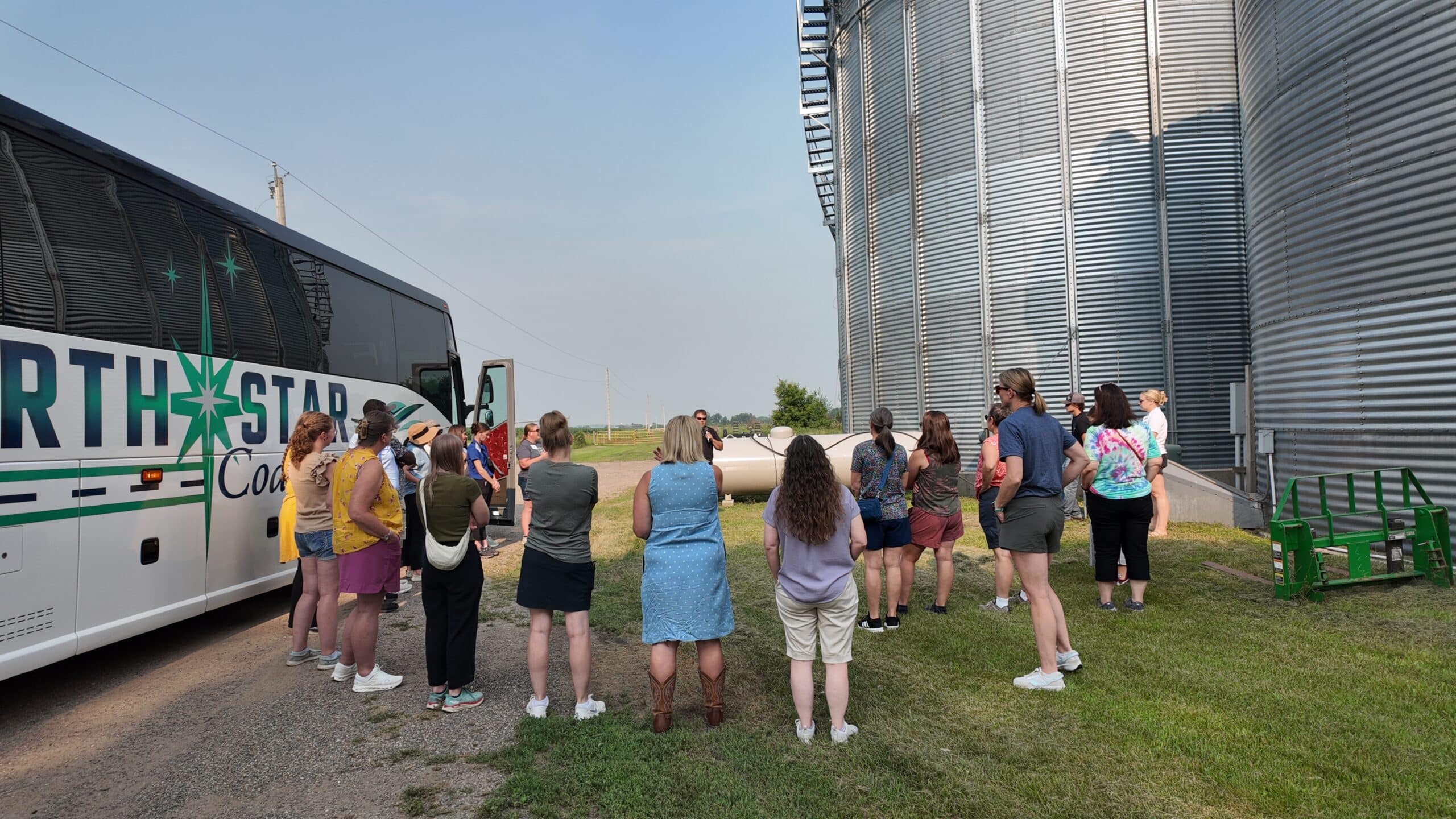
After seeing the cattle, our group moved on to get an up-close look at some large pieces of farm equipment! Tractors are among the most recognizable tools of agriculture and have many uses, including planting seeds, applying fertilizers and pesticides, and harvesting crops. Technology has also become a very important part of farming: these machines can plant crops with very precise spacing and are capable of spraying minute, evenly-dispersed amounts of water, fertilizer, or herbicides onto the plants with minimal human intervention.
Tractors are essential pieces of equipment, but are very expensive and often are difficult to fix. A new tractor can cost hundreds-of-thousands of dollars! Because of this, farmers often hold on to their machines for decades. Tom Smude shared that one of their tractors was about 20 years old, and one of our attendees shared that her family still uses a piece of equipment nearing 100 years old!
In addition to growing crops to feed their cattle, Smude also grows sunflowers! In 2009, after experiencing crop devastation for multiple years, the Smude family conducted extensive research into drought-tolerant crops and planted 60 acres of sunflowers. One year later, they built an oil crush plant to make sunflower oil. They also use the byproduct sunflower meal as an ingredient in their cattle feed.
Sunflower oil has a lighter taste and color than other vegetable oils, has a higher vitamin E content, and has lower saturated fats. Unlike many commercial oils, Smude’s sunflower oils are cold-pressed (mechanically pressed and filtered), allowing it to hold on to the taste and smell of the seeds.
We got a look inside the sunflower oil processing facility on the tour! The seeds are ground and pressed to extract the oil, which is then filtered and pressed again to remove sediments and residues. The whole warehouse was filled with a nutty scent from the seeds. Just outside the warehouse was a small field filled with sunflower crop just a week out from blooming.
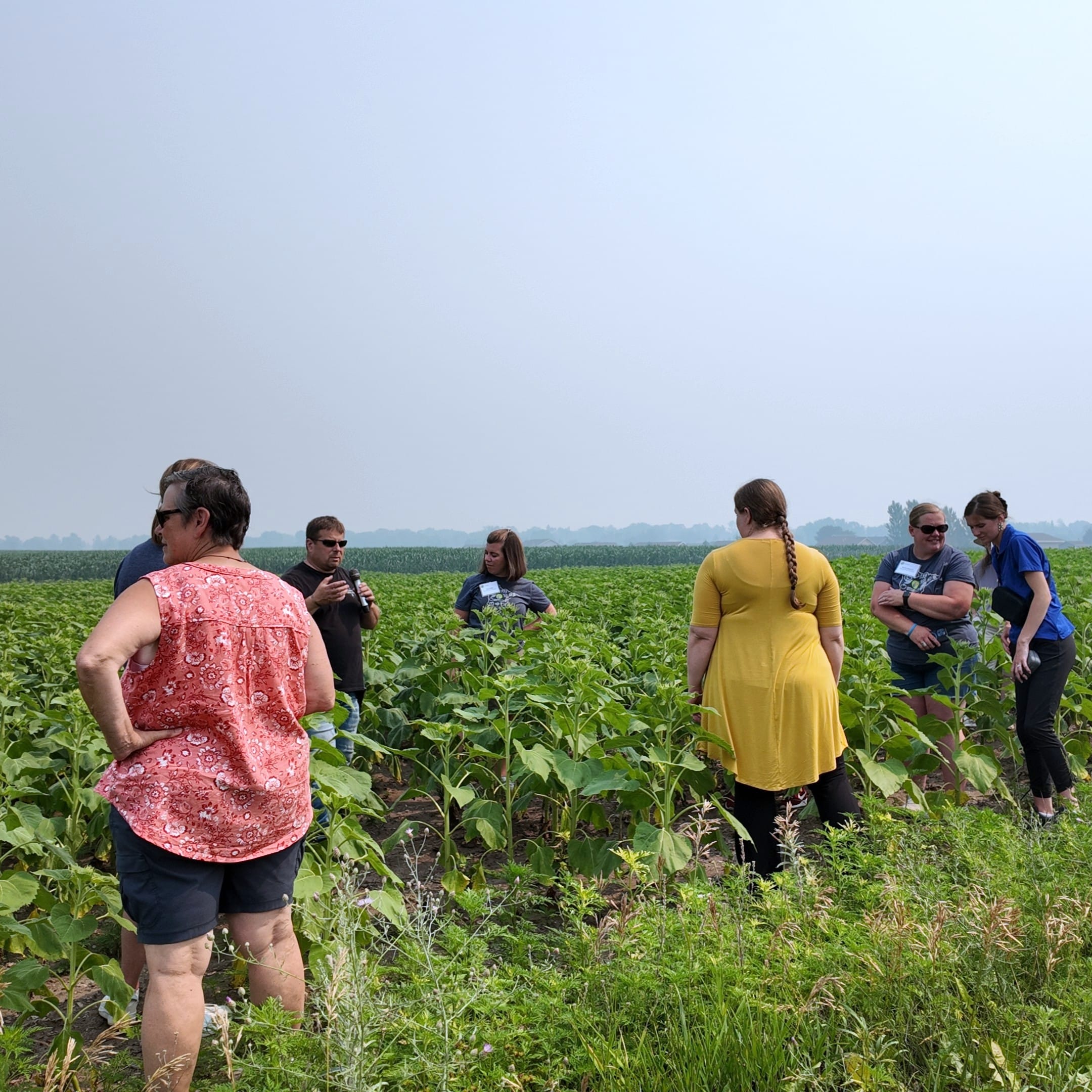
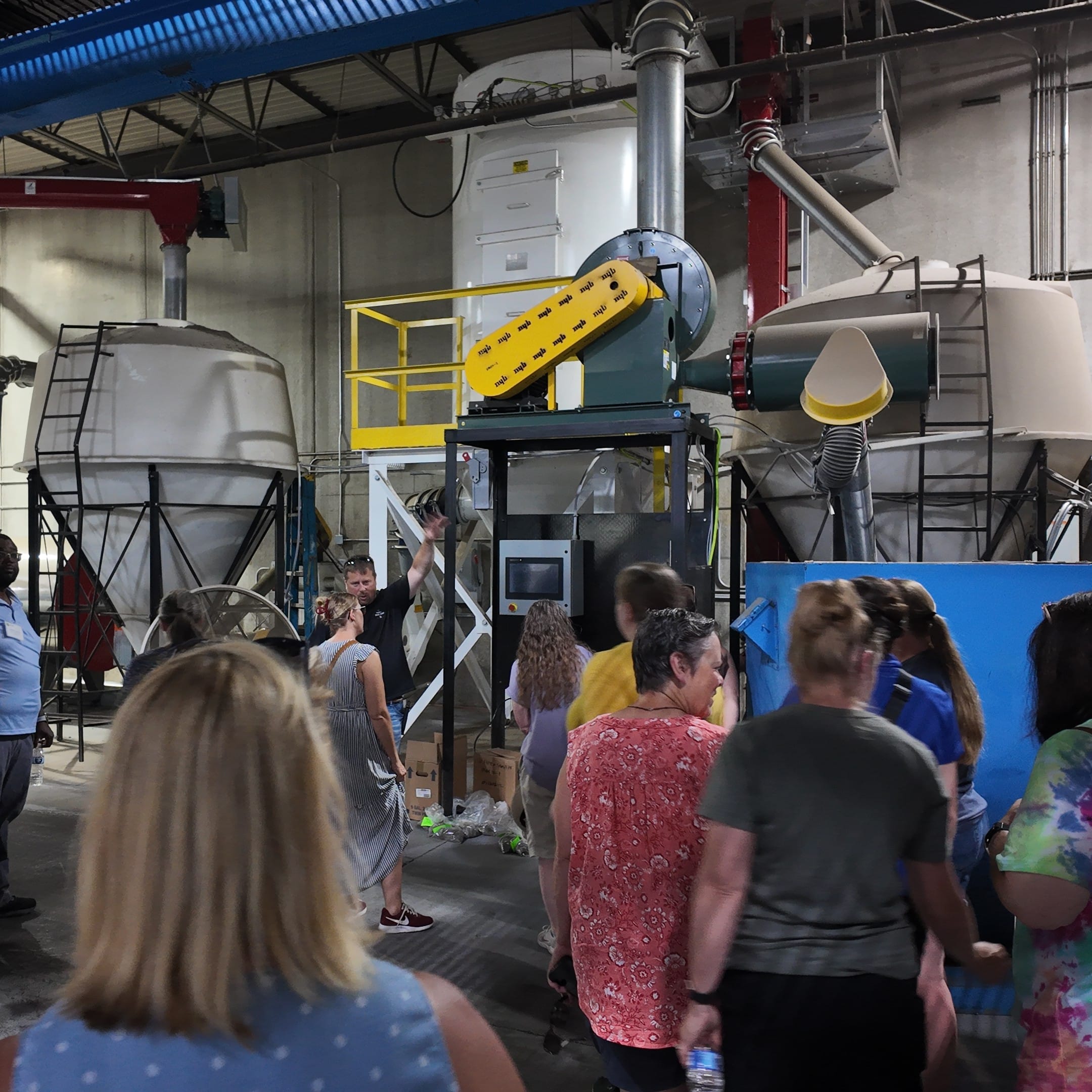
The sunflower oil is sold directly by Smude’s brand, but can also be found in retail stores, along with their microwave popcorn. Launched in 2017, their popcorn serves as a healthier alternative to other brands. Many popular brands use chemicals or fluorocarbon (a type of wax) in their bags, whereas Smude’s bags are made of multi-layered paper with no chemicals in order to meet their all-natural standards. During the tour, Tom Smude explained that their popcorn has a higher price point, which can be a deterrent to consumers. However, the price accounts for the high-quality popcorn, the locally-produced oil, and higher-cost paper bags. And as with many locally- and sustainably-produced food products, you can taste the quality.
On top of farming and oil production, the Smude family operates a couple other local businesses. Midwest Sales & Construction sells livestock equipment, grain bins, and grain-handling equipment, and also services grain bins and dryers. They also operate Rich Prairie Custom Woods which offers woodworking services such as custom molding and CNC machining for a variety of customers.
To end our time at Smude farms, our tour group shared a delicious lunch of burgers! The high-quality beef came directly from their Black Angus beef farm, making for a delicious meal.
Sprout MN
Community Supported Agriculture and Food Hub
The second part of our tour was hosted at Sprout MN food hub in their community classroom space! Sprout was established in 2012 with a mission to connect community members to farmers and strengthen the local food system. Grounded in their core principles of food, art, and culture, they work to increase access to healthy foods, encourage entrepreneurship, and cultivate creativity.
We met with Arlene Jones, the Executive Director of Sprout, to learn about Sprout’s partnership with local schools through the Farm to Kids initiative in Minnesota. Staff in schools, districts, and other educational institutions may not know where to start in sourcing large quantities of local foods on a regular basis throughout the school year. This is where Sprout steps in! Schools communicate with Sprout about what foods they are looking for, Sprout then uses their connections with farmers to source the food and delivers it right to the school or district center.
Sprout also supports local producers with their commercial kitchen. The kitchen is outfitted with commercial-sized appliances that are capable of making larger batches of goods than would be possible in a home kitchen. The kitchen is available to be rented out to local producers who are licensed for cottage food production. It’s also used to host cooking classes and other events!
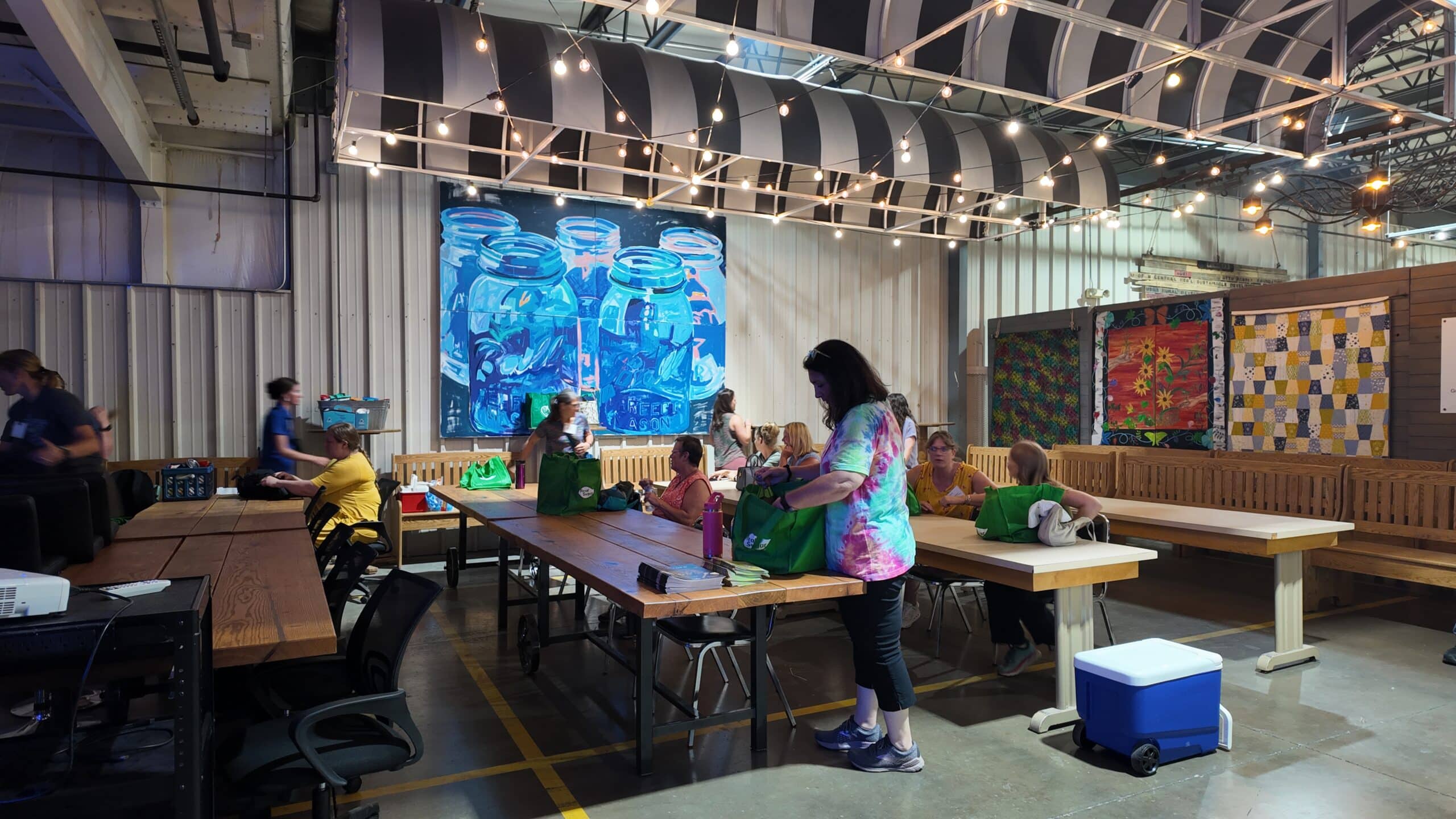
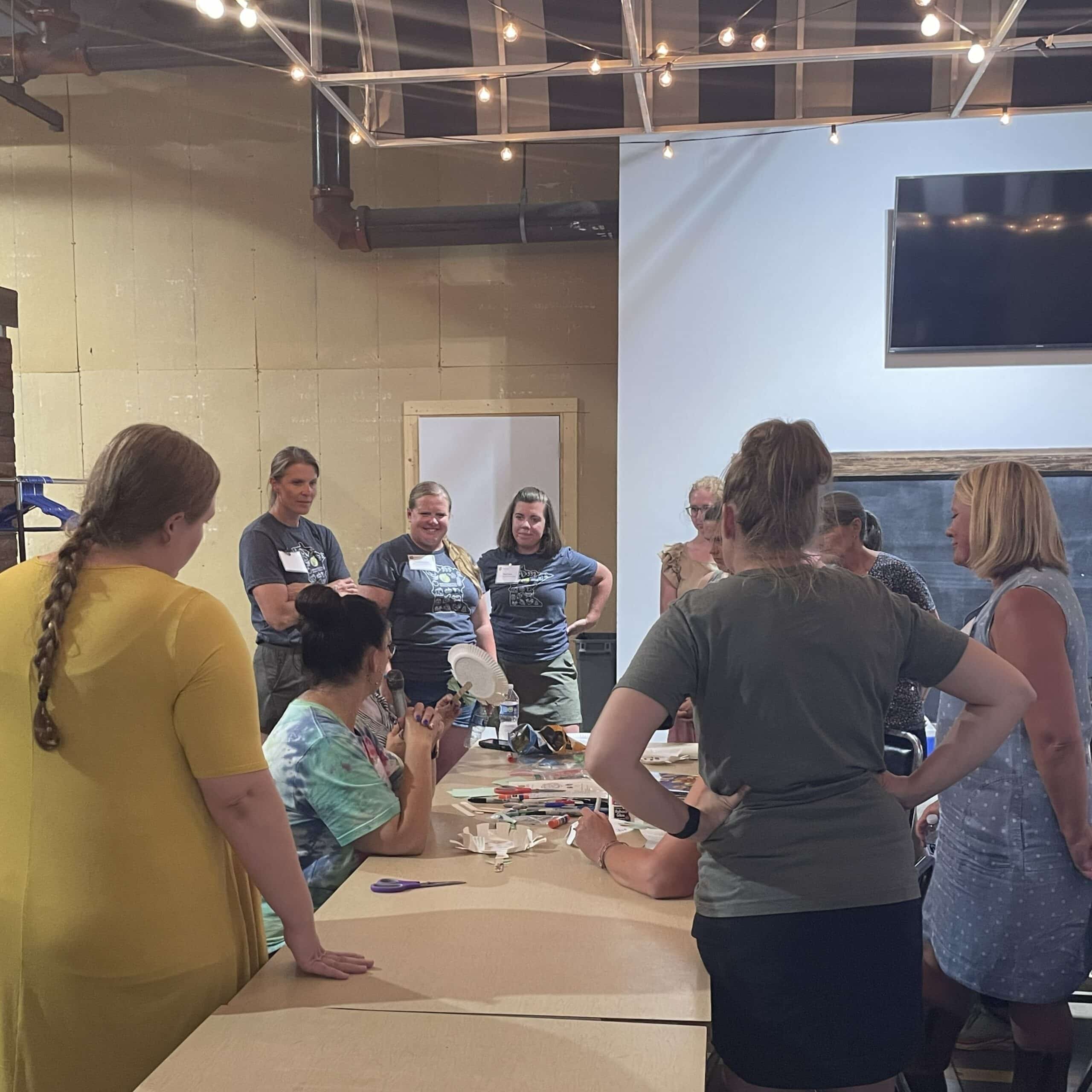
While at Sprout, attendees got a chance to try out some of our popular lesson plans! These lesson plans provide students with an opportunity to engage in agricultural topics in a way that aligns with Minnesota-state education standards. In matching with the themes of the tour, we selected three lesson plans to feature: one observing the growth and development of sunflowers, one investigating the digestive systems of livestock, and one exploring how new varieties of produce can be developed! Each lesson plan is also designed for a different grade level, allowing educators to try out an age-appropriate activity that could be used in their classroom.
Sunflower Life Cycles (Grade level: K-2) - Students observe the growth and development of sunflowers, identify how sunflower seeds are used, and make a paper plate sunflower to illustrate the life cycle of the sunflower.
Got Guts? (Grade level: 3-5, MN: Grades 3, 5–7) - Students investigate the different digestive systems of livestock, examine the unique nutritional needs based on these structures, and discover the responsibilities of an animal nutritionist.
Apple Genetics: A Tasty Phenomena (Grade level: 6-8, MN: Grades 7–9) - Using the context of apples, students will apply their knowledge of heredity and genetics to distinguish between sexual and asexual reproduction as they explain how new varieties of apples are developed and then propagated to meet consumer demand for a tasty, uniform, consistent product.
Impact of Summer Teacher Tours
Minnesota Agriculture in the Classroom is a part of a nationwide effort to increase agricultural literacy in K-12 students. Our Summer Teacher Tours are unique professional development opportunities that connect educators with agriculture. Tour attendees get to experience agricultural production, processing, and distribution techniques while exploring standards-based, agricultural-themed lesson plans and resources. Through collaboration and reflection, educators learn how to integrate agriculture into all subjects to enhance student learning.
Follow Minnesota Agriculture in the Classroom on Facebook and Instagram!
Learn about our featured resources, stay up to date on upcoming events, and more!
Sign Up to Receive Our Newsletter!
The Minnesota Agriculture in the Classroom e-newsletter provides us with the opportunity to connect educators with ideas on incorporating food, fiber, forests, flowers, and farming in their curriculum. Our newsletter highlights these connections through lesson plans, websites, books, videos and additional materials for classroom teachers, agriculture advocates and community volunteers who teach science, social studies, language arts, and health/nutrition. Stay updated with all Minnesota Agriculture in the Classroom upcoming events and news by subscribing!
Click here to find our sign up page!
Check out our other blog posts!


August 17, 2026
Elliot Dusosky
Minnesota Agriculture in the Classroom