
Farming Across Minnesota
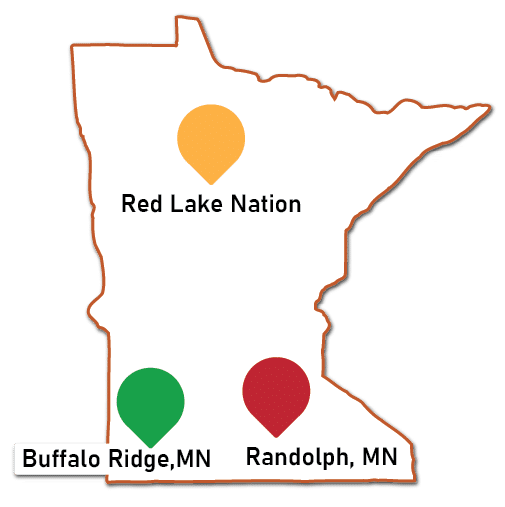
Farmers in Minnesota work hard to grow their plants and take care of their animals. They pay special attention to the soil, water, land, and climate in their part of the state. These resources help determine what farmers can grow or raise. Farmers also use their knowledge, skills, tools, and technology to make their farms more productive. Keeping their farms healthy for the future is very important. They use knowledge and skills learned from past farmers while also learning new ways to farm. Let’s look at three great Minnesota farms: Red Lake Buffalo Ranch, Radman Family Farm, and Linden Livestock.
Radman Family Farm
Radman Family Farm is near Randolph in southern Dakota County. The farm has been in the family since 1899. Today, the fourth generation grows corn and soybeans.
This part of Minnesota is a good place for crop farming because it has quality soil. The farm is also close to grain buyers and companies that sell farm supplies. Most of the grain is sold within an hour of the farm. Some grain is later moved by train or by barge on the Mississippi River.
The Radman family uses no-till and strip-till farming practices to help keep the soil productive. Productive means a resource can help make or grow something useful. With no-till, seeds are planted into last year’s crop residue without plowing the field. With strip-till, only a narrow strip of soil is tilled for planting. Most of the soil is left undisturbed. The family also uses technology to apply fertilizer where it is needed. These choices help protect the soil and water for the future.


Red Lake Buffalo Ranch
Red Lake Buffalo Ranch is on the Red Lake Nation in northern Minnesota. Buffalo are important to the Red Lake Nation’s history, culture, and community. The herd also provides meat for the community.
The Red Lake Nation started the ranch with three buffalo in 2021. By 2022, the herd had grown to 31 buffalo. The buffalo graze and roam on almost 600 acres.
Northern Minnesota has open land, grasses, water, and space for buffalo to move. These resources help the herd grow and stay healthy. Ranchers also use their knowledge and skills to care for the buffalo and the land.
The land, water, grasses, animals, and ranchers’ knowledge all help the ranch stay productive. Productive means these resources help provide food, care for the herd, and support the Red Lake Nation community.

Moorse Livestock Goat Grazing
Moorse Livestock Goat Grazing is located near Minneota, Minnesota. Grant Moorse and his family raise goats for meat and also use goats for grazing jobs.
Goats are raised in this area of Minnesota because they eat many weeds and brushy plants. They can help clear places like groves, pastures, and backyards. Grant uses fencing so the goats can graze safely in different places.


The goats need food, water, shelter, space, and daily care. In Minnesota, they also need protection from cold weather and good nutrition to stay healthy. Grant raises Boer-Savannah goats because they are hardy, which means they are strong and can handle Minnesota weather.
Grant uses goats, fencing, feed, and his knowledge to keep his family’s farm productive. A productive farm uses its resources wisely to grow food and other farm products. The goats can be raised for meat. They can also help care for the land by eating weeds and brush while grazing.