What are AgMags?
The AgMag series is a free, standards-based collection of magazines available in both print and digital formats, designed to support K–6 learning in science, social studies, and language arts. Each grade-specific AgMag, published for kindergarten through sixth grade, is thoughtfully developed to match students’ reading levels and interests, fostering curiosity, engagement, and meaningful learning for all students.
AgMags are created by Minnesota Agriculture in the Classroom and are aligned to Minnesota Academic Standards and National Agricultural Literacy Outcomes, helping students better understand where their food, fiber, and fuel come from.
Inside the AgMags
The AgMag Series is composed of nonfiction magazines that students can read and keep. Each AgMag issue includes:
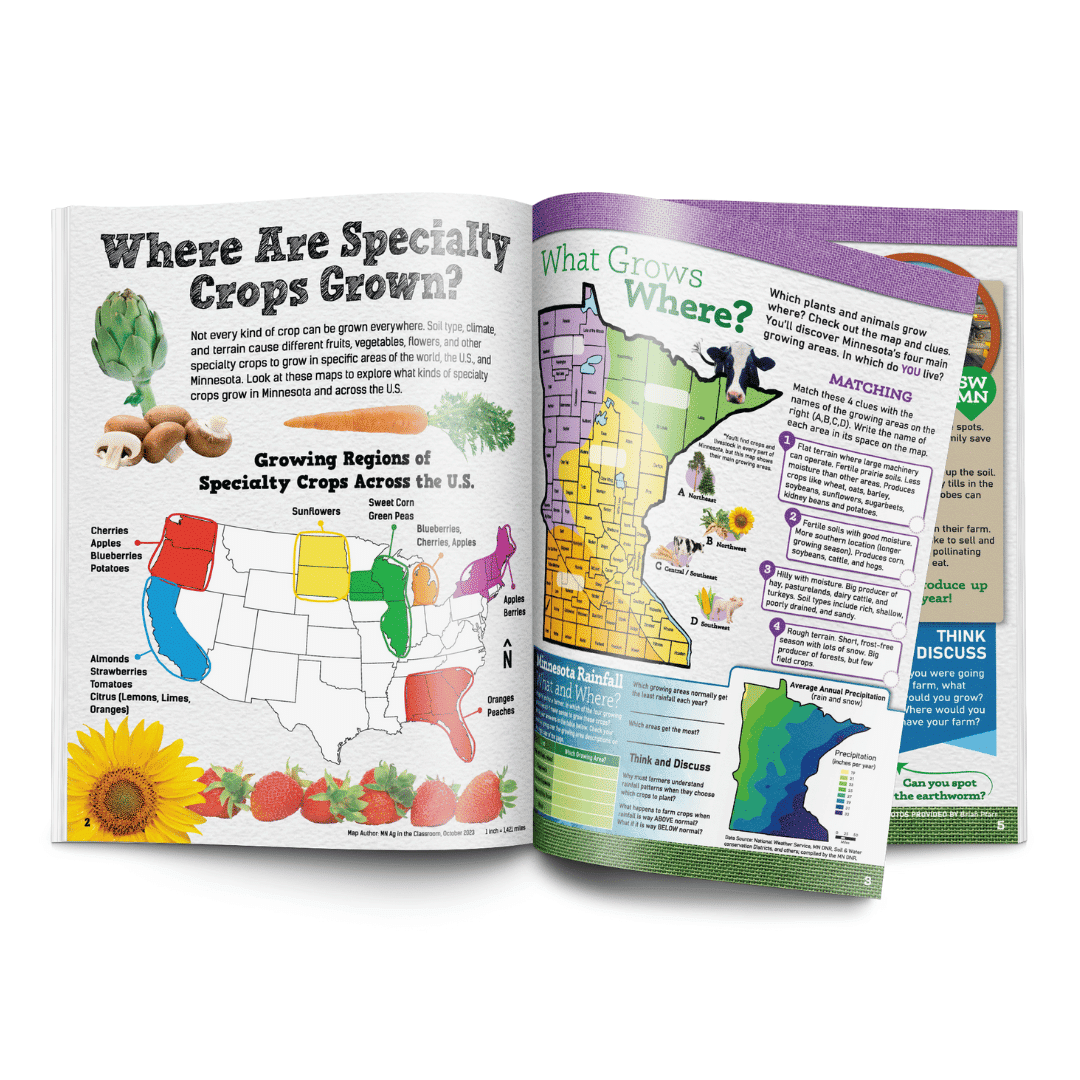
Grade K-6 have their own dedicated Fall and Spring issues, thoughtfully designed to build agricultural understanding.
Why Do Educators Use AgMags?
Educators like the AgMag Series because it:
The AgMag Series includes free companion lesson plans for each issue. These lesson plans follow Minnesota academic standards and National Agricultural Literacy Outcomes.
Testimonials from Educators
My favorite part of the AgMag series is the grade level readability, the colorful, detailed and real pictures used and that it references MN people, places and things. The AgMags really grabs my students' attention especially when they realize they are reading about their state.
- 1st & 2nd Grade Teacher, Academy for Sciences & Agriculture Elementary
Teachers can utilize the wonderful agricultural insight in the AgMags at any level of elementary. The pictures, graphs, and short magazine-like structure make the information inviting and will hold the interest of all students. Even without any preparation, these magazines are full of educational connections that will add to your classroom material.
- 3rd Grade Teacher, South Point Elementary
My students have looked forward to reading the Ag Mags together for something new to break up the predictable routine. They enjoy reading about things they can relate to that we don’t normally read too much about in class, and they love having their own copy to write in and keep. My students especially enjoyed learning about farming in other parts of the state because it helped them see how agriculture can be different depending on the soil and climate while still feeling relatable to them. I really appreciate the teacher’s guide that comes along with it. The background info is laid out nicely, especially the vocabulary. It makes my job easier!
- 5th Grade Teacher, Lanesboro Public School
AgMags are a great way to implement agriculture into my classroom lessons that I am already teaching. They provide excellent photos and examples so students are able to see information that is relevant to what we are learning in class, while also promoting real farmers across the state of Minnesota so students can make connections to farmers in our area. AgMags make great connections to Minnesota state standards in many different ways and encourage teachers to bring more agriculture into our classrooms in an easy and free way. I love that AgMags are easy to use and implement, colorful and eye-catching, and interactive for students when paired with the online components.
- 4th Grade Teacher, JWP Elementary

How do you get AgMags?
Teachers can visit mnagmag.org/order-free-resources to:
What’s on the AgMag Website?
The AgMag website is a place where educators can find ready-to-use classroom resources that support agricultural learning.
Teacher Guides and Lesson Plans
Free companion resources for each AgMag issue, aligned to Minnesota Academic Standards and National Agricultural Literacy Outcomes for each grade level K-6.
The Ag Terms Glossary helps students build agriculture vocabulary and supports reading comprehension.
Minnesota Agriculture Products
Web pages that highlight specialty crops and commodities raised in Minnesota, helping students connect learning to their state.
Digital versions of each grade-level AgMag for easy classroom use and student access. Students can explore issues page by page online, with quizzes for grades 2–6 and additional learning features.
Videos that introduce students to the many careers connected to agriculture.